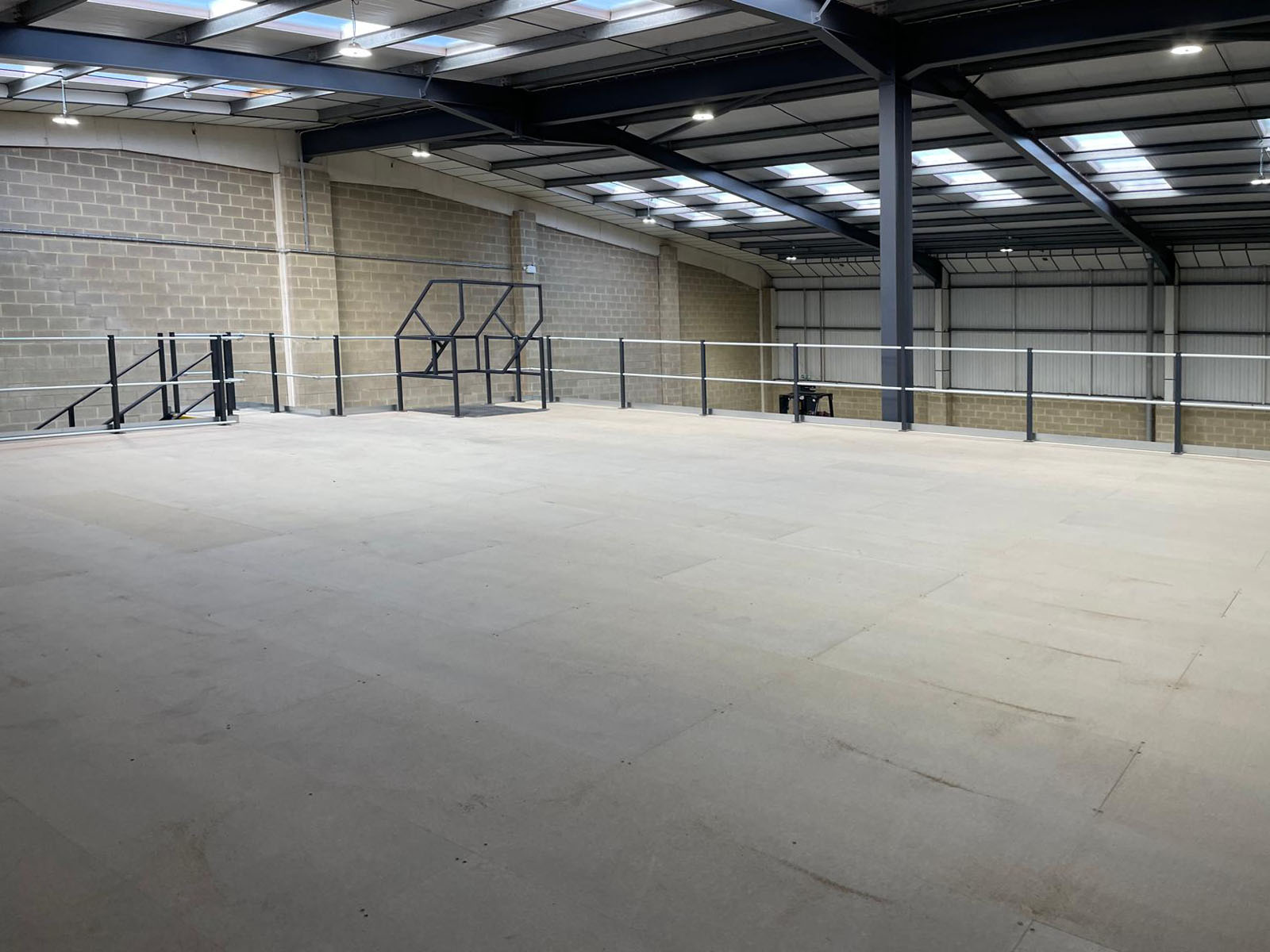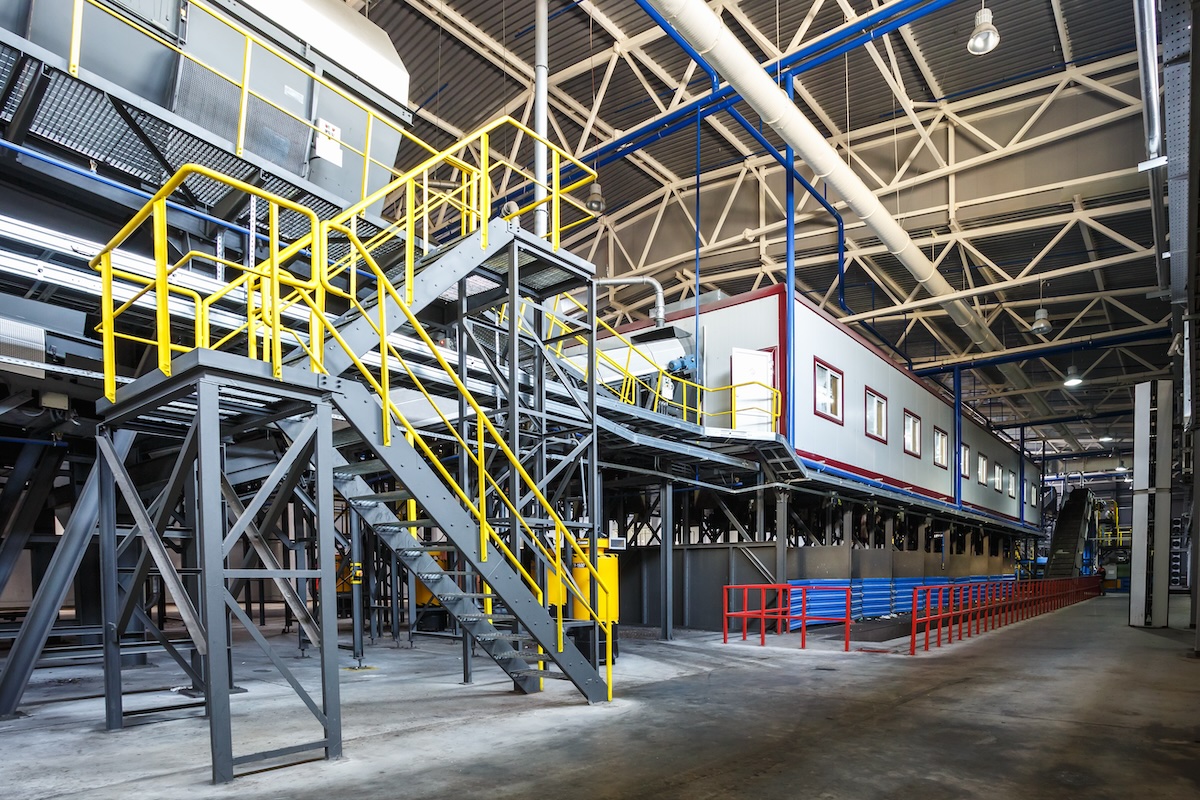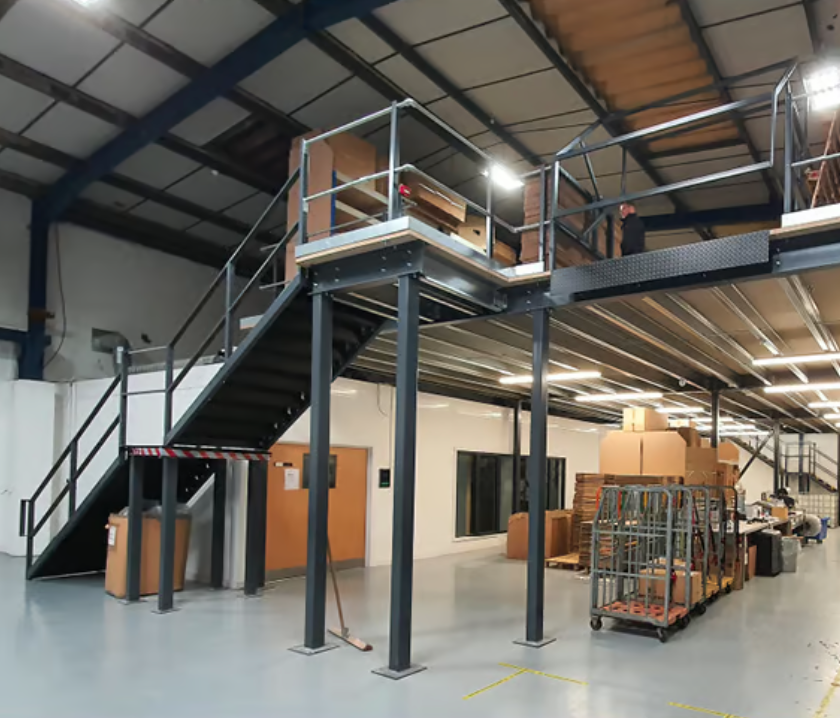
The short answer is yes, you can store pallets on a mezzanine floor. Plenty of UK warehouses do it every day. The longer answer is that pallet storage on a mezzanine floor is only safe and compliant when the floor, the loading method and the area underneath have all been designed for it from the start. A mezzanine built for boxed stock and hand picking will not become a pallet store just because someone has a forklift and a gap in the handrail.
This guide is for warehouse and operations managers weighing up whether pallets can go upstairs. It covers what the floor has to be rated for, how pallets get up there (pallet gates, lifts and conveyors), what happens once they are on the deck, and the design decisions that are much cheaper to make now than to fix later.
Can you store pallets on a mezzanine floor?
Nothing in UK regulations says pallets cannot be stored on a mezzanine. What the law does say, through the Building Regulations, the Work at Height Regulations 2005 and general health and safety duties, is that the structure must be safe for its intended use, people must be protected from falls, and the way goods are moved must not put anyone at risk.
In practice, that means four questions decide whether pallet storage is allowed on your mezzanine:
- Is the floor rated for the weight of loaded pallets, both spread across the deck and concentrated under each pallet?
- Is there a safe way to get pallets up and down without leaving an open edge?
- Can the pallets be moved around the deck without damaging the floor or overloading it?
- Have fire protection, escape routes and the loading zone below been designed around pallet use?
If the answer to all four is yes, and the design has Building Control approval, pallets are allowed. If any answer is no, you have a problem, and it is usually the first one.
What load rating do pallets need?
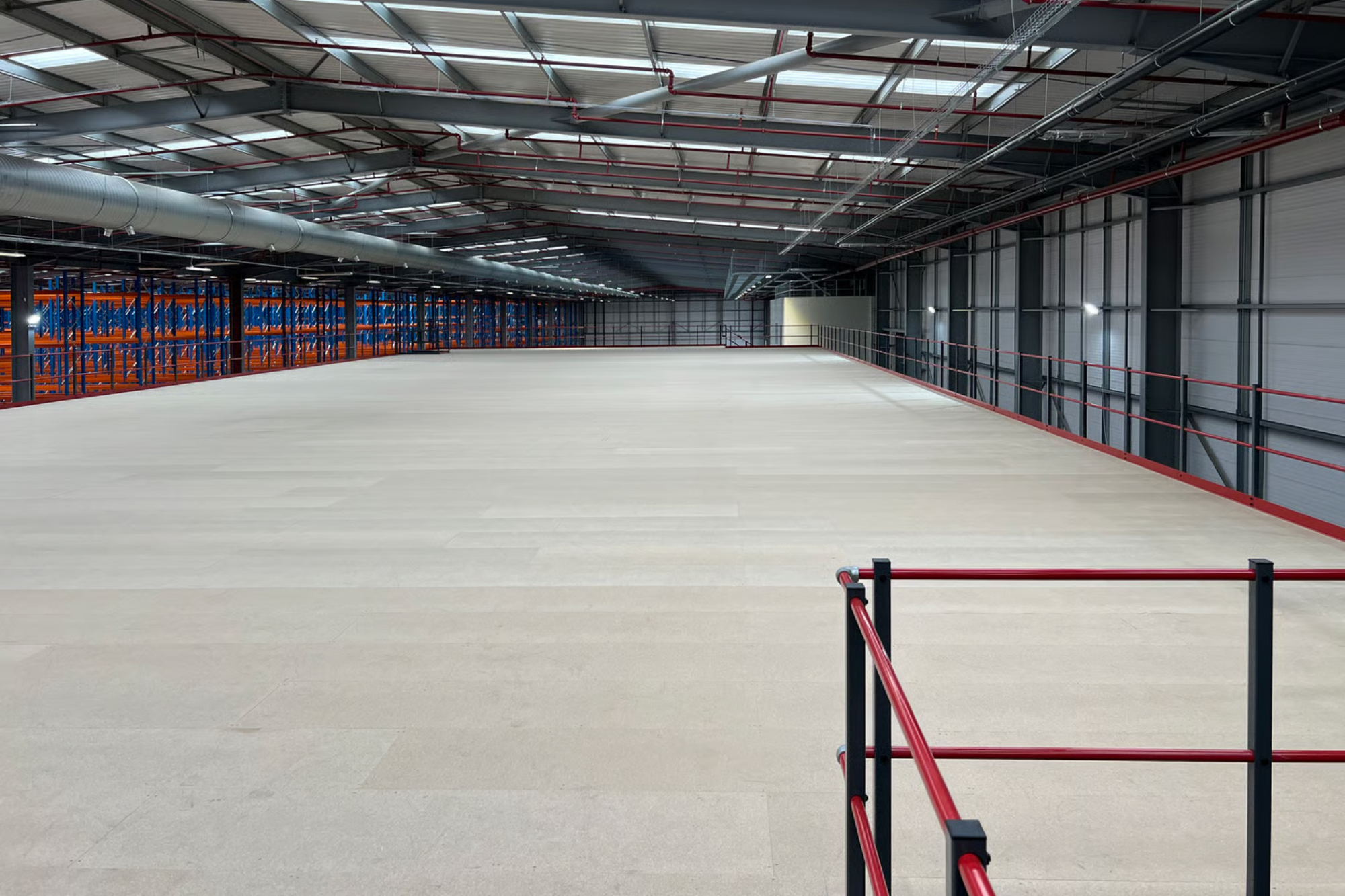
Every mezzanine is designed for a specific load, usually expressed in kilonewtons per square metre (kN/m²). Our guide to mezzanine floor load capacity covers the rating bands in detail, but as a rough guide, light storage floors are typically rated around 4.8 kN/m² (about 480 kg/m²), medium storage between 5.0 and 7.2 kN/m², and heavy storage from 7.2 to 10 kN/m² or more.
Pallets are where those numbers start to matter. A standard UK pallet has a footprint of 1200mm × 1000mm, or 1.2m². Put 1,000kg of stock on it and the load directly under that pallet works out at roughly 8.2 kN/m² (1,000kg × 9.81 ÷ 1.2m²). That is well above a typical light storage rating, before you double stack or add the weight of the pallet itself. A 500kg pallet, by contrast, comes to around 4.1 kN/m², which a light storage floor may handle in a single layer.
That is why the average weight of your pallets is not enough to specify the floor. The engineer needs your heaviest likely pallet, whether you will stack pallets two high, how densely they will be packed, and where on the deck they will sit. A floor can cope with its rated load spread evenly and still be overloaded locally by a row of heavy pallets parked tight together at the loading edge.
Two more loads are easy to forget. The first is the equipment moving pallets around, which is covered below. The second is what happens beneath the mezzanine columns. Pallet storage puts heavy loads down through a relatively small number of baseplates, and the existing warehouse slab has to carry them. A slab survey is a normal part of mezzanine floor design for pallet use, and some sites need new pad foundations under the columns.
Once the floor is installed, its rating should be displayed on a load notice at the access points, so everyone using it knows the limit.
How do pallets get onto a mezzanine?
Mezzanine pallet loading is the part most people underestimate. There are four realistic options, and the right one depends on your volumes, your equipment and the space you have at ground level.
| Loading Method | Best For | Main Consideration |
|---|---|---|
| Pallet gate with forklift | Most warehouses with a forklift or stacker | Needs a clear, protected loading zone below |
| Goods lift or pallet lift | Sites without forklifts, or frequent movements | Higher cost, LOLER inspections |
| Vertical conveyor | High volume, continuous flow | Specialist equipment, less flexible |
| Forklift operating on the mezzanine | Rare, heavy industrial use | Very heavy structure and deck, high cost |
Pallet gates and forklift loading
For most sites, the answer is a pallet gate combined with forklift loading from the ground floor. A forklift or stacker lifts the pallet to deck level and places it through the gate, and a member of staff on the mezzanine moves it away.
The critical point is that a pallet gate must never leave an open edge. A properly designed mezzanine pallet gate (usually a counterbalanced “up and over” type) works on a two barrier principle: when the side facing the forklift opens, a barrier on the mezzanine side closes, so the person upstairs is never exposed to the drop. Simple sliding or lift-out barriers that leave the edge open during loading do not meet that principle, and the Work at Height Regulations 2005 put the duty on employers to prevent falls where they can. Our article on designing mezzanine access, walkways and ancillaries covers pallet gates alongside handrails, kickplates and edge protection.
For pallet gate mezzanine loading to work day to day, the gate has to be sized for your largest loaded pallet with clearance on each side, tall enough inside for your highest load, and positioned where the forklift can approach square on. It also has to be rated for the weight of the pallets passing through it, and the floor immediately behind the gate needs to take the concentrated load of pallets being set down there.
The forklift side matters just as much. Forklift loading to a mezzanine needs a truck that can reach deck height with a loaded pallet, enough room for it to approach and reverse, and a loading zone that keeps pedestrians away while it is in use. The HSE’s guidance on workplace transport safety (HSG136) is a sensible starting point for traffic routes and exclusion zones. Protecting the mezzanine columns near the loading area from impact is also important, because a forklift strike on a column can damage the whole structure.
Goods lifts and pallet lifts
If you do not run forklifts, or you move pallets up and down all day, a goods lift or pallet lift can be the better choice. It removes the need for a forklift at the loading point and keeps the mezzanine edge fully closed. The trade-off is cost and space: a lift has to be designed into the structure, needs its own footprint on both levels and is lifting equipment under the Lifting Operations and Lifting Equipment Regulations 1998 (LOLER), so it needs regular thorough examination.
Conveyors
For high volume operations, vertical conveyors can move pallets or tote loads between levels continuously. They are highly efficient for the right flow but add specialist equipment, so they tend to be considered as part of a wider materials handling design rather than a first choice for a single storage mezzanine.
Driving forklifts on the mezzanine
Running a forklift on the mezzanine deck itself is possible, but it is uncommon. It requires a much heavier steel structure, a deck such as concrete on steel that can take wheel loads, and wider edge protection. For most storage mezzanines it is far more cost effective to load from below and handle pallets manually on top.
Moving pallets once they are on the mezzanine
Once a pallet is through the gate, it still has to get to its storage position. On most storage mezzanines this is done with a hand pallet truck, and that creates a load most people never think about.
A loaded pallet truck puts the full weight of the pallet onto a few small wheels. That concentrated load, repeated along the same route day after day, can damage standard particleboard decking over time and needs to be allowed for in the design. Common solutions include a heavier duty deck in pallet routes, steel plating in the loading area behind the gate, or a stronger deck across the whole floor. Powered pallet trucks add extra weight from the battery and should always be declared at the design stage.
It is also worth planning how pallets will be stored on the deck. Block stacking directly on the floor is the simplest option but uses space quickly and makes access to individual pallets harder. Racking on the mezzanine increases density but introduces point loads under each upright, which usually need spreader plates or a floor designed for them. Many sites break pallets down on arrival and store the stock on shelving instead, which is lighter and easier to pick from. Unirack, our sister company, supplies shelving and storage systems that are often used this way on mezzanine floors.
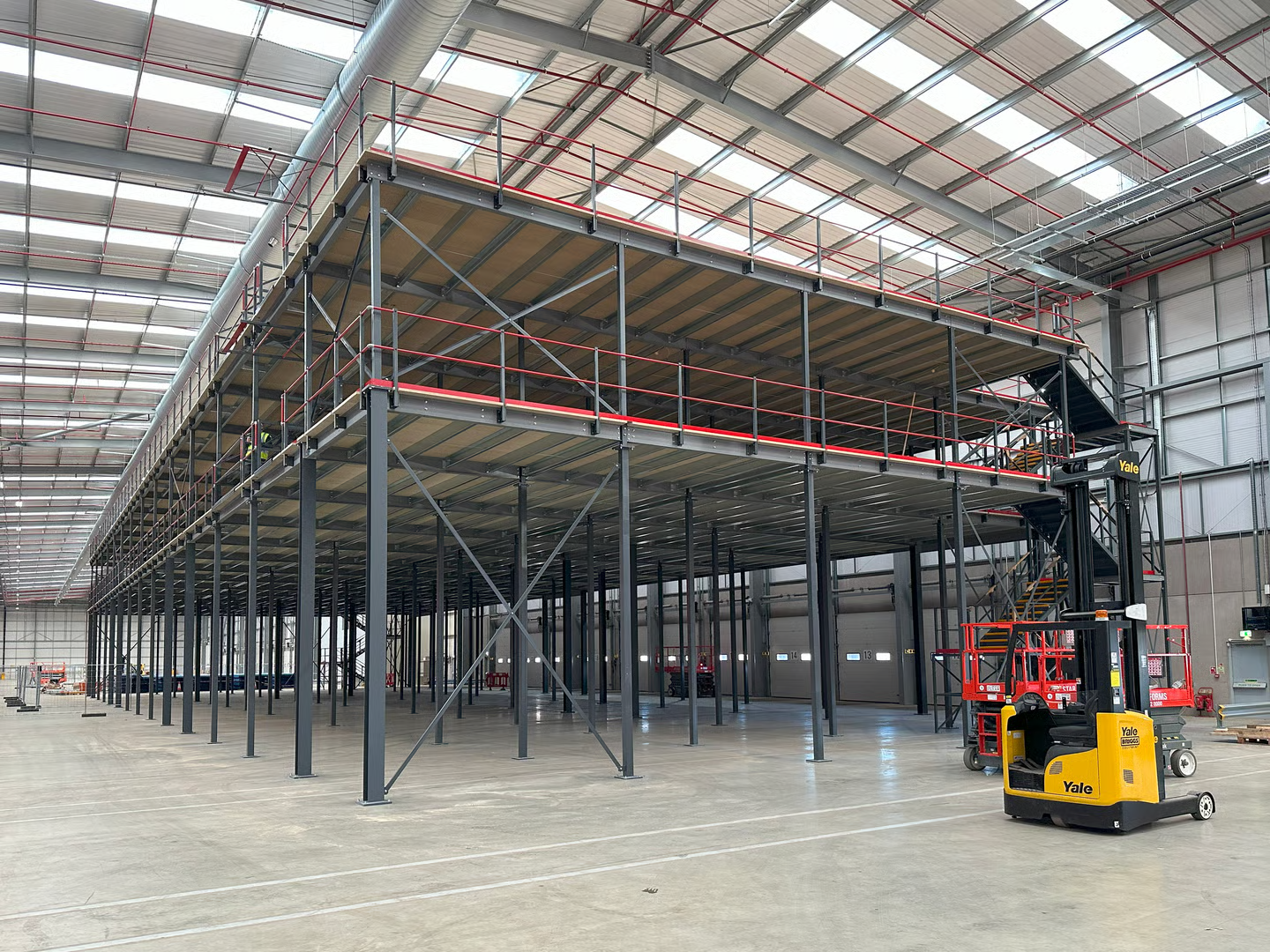
What the design must allow for
If pallets are part of the plan, these decisions need to be made before the mezzanine is designed, not after it is installed:
Pallet specification. The size, maximum weight and stacking height of the pallets you will store, not just the average.
Handling equipment. Every forklift, stacker, pallet truck and lift that will interact with the floor, with its weights.
Loading position. Where the gate or lift goes, the clear approach for forklifts, and the protected zone underneath.
Headroom. Enough clear height below the deck for people and equipment, and enough height above it for the tallest loaded pallet at the gate.
Fire protection and escape. Storage mezzanines often need fire protection, depending on their size, use and escape distances. Pallets of combustible stock can affect this, so it should be part of the brief. Our page on fire rated mezzanine floors explains the options.
Future use. If there is any chance of heavier pallets, double stacking or powered trucks in future, specify for it now. Upgrading the load rating of an installed mezzanine is far more disruptive and expensive than designing it in.
All of this feeds into the wider warehouse mezzanine floor layout, and it has a direct effect on price. A floor rated for heavy pallet storage with a gate, column protection and upgraded decking will cost more than a light storage platform, so it is worth checking that these items are clearly listed in any quote. Our mezzanine quote checklist and guide to mezzanine floor costs explain what to look for.
Is a mezzanine the right place for your pallets?
Sometimes the honest answer is that pallets belong on the ground floor and the mezzanine should be used for something else. If you move large volumes of heavy pallets, it can be more efficient to keep them in floor level racking and use the mezzanine above for picking, packing, returns or lighter stock. That frees up the most valuable floor space for the heaviest loads and keeps forklift movements at ground level.
Where pallets do need to go upstairs, a well designed warehouse mezzanine floor with the right rating and loading method can add a substantial amount of storage without the cost of moving to a bigger unit. If you are still working out how much space you need, our guide to calculating warehouse storage capacity is a good place to start.
Planning pallet storage on your mezzanine
Pallet storage on a mezzanine floor is allowed, and it works well when the floor rating, loading method and handling equipment are designed together. The most expensive mistakes come from specifying a mezzanine for light storage and then trying to use it for pallets.
At The Mezzanine Company, we design and install storage mezzanine floors around the way your warehouse actually works, including pallet gates, load ratings, fire protection and Building Regulations approval. You can see examples in our work, or get a quote and tell us about your pallets, your equipment and your space.