There usually comes a moment when a warehouse stops being big enough. Stock starts creeping into the aisles, the goods-in area doubles as overflow storage, and someone half-jokingly suggests it might be time to find a bigger unit. It feels like the obvious next step. More orders, more stock, more space needed, so you move.
Before you start booking viewings, it is worth knowing what that decision actually costs. Relocating a warehouse is one of the most expensive and disruptive things a growing business can take on, and for larger operations the bill regularly runs into six figures. A lot of that spend is invisible until you are deep into the process and it is too late to turn back.
This guide breaks down what a warehouse relocation really costs in the UK, including the line items most people forget. Then we will look at the alternative that a lot of businesses overlook, which is adding the space you need inside the building you already have.
How much does it cost to relocate a warehouse in the UK?
The honest answer is that it depends on your size, your stock, the distance, and how complex your operation is. But there are reliable benchmarks to work from.
Based on published industry figures, relocating a warehouse in the UK typically costs:
- Around £690 to £901 per square metre for a smaller warehouse, an average of roughly £796
- Around £760 to £1,076 per square metre for a larger distribution centre, an average of roughly £918
For a modest 1,000 square metre unit, that puts you in the region of £800,000 of total relocation-related spend once everything is accounted for. Scale that up to a large distribution centre and the numbers climb quickly. This is why warehouse relocation is rarely a quick win, even when the new building looks perfect on paper.
Location plays a big part too. The cost of warehouse space in the UK is among the highest in the world, and where you land has a direct impact on both your move and your ongoing rent. We will come back to that point later, because it is the cost most people leave out of their sums entirely.
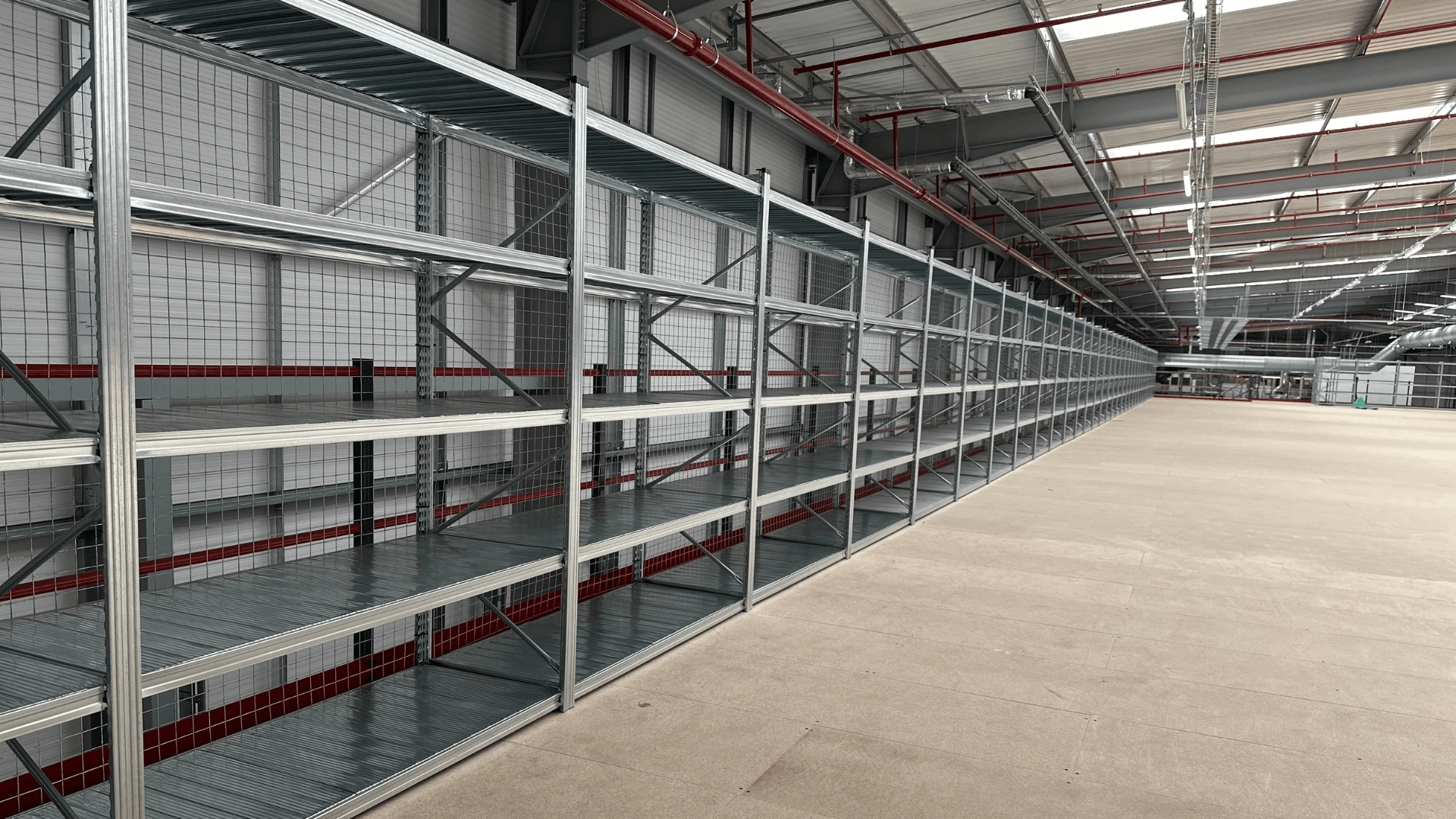
The full warehouse relocation cost breakdown
A relocation is not one cost. It is dozens of them, stacked on top of each other, spread across leaving your old site and setting up the new one. Here is where the money goes.
Stock transport and handling
Moving your stock from one building to another is often the single most visible cost, and it adds up fast. The final figure depends on:
- The volume and weight of your stock
- The distance between the old and new premises
- Any special handling for fragile, perishable or hazardous goods
- The labour needed to pack, load, transport and unload
You are usually paying for lorry time, specialist labour, and equipment such as forklifts and pallet trucks. For most warehouse moves this lands somewhere between £10,000 and £60,000.
Specialist movers and project management
Most warehouse relocations need a specialist commercial moving firm rather than a standard removals company. The scale, the equipment, and the insurance involved are simply different. Their fees typically cover:
- Site surveys and move planning
- Dismantling and reassembling racking
- Packing and securing goods
- Project management to keep disruption to a minimum
Expect this to fall between £20,000 and £100,000 depending on the complexity of your operation.
Racking and equipment dismantling and reassembly
Your racking, conveyors, and storage systems have to come down safely and go back up again at the other end. This is skilled work, and it is often handled by the movers or a separate contractor. It includes:
- Dismantling shelving, racking and any existing mezzanine
- Reassembly at the new site
- Storing loose components if the schedules do not line up
Budget somewhere between £5,000 and £40,000.
Packing materials and labour
Pallet wrap, crates, protective packaging, labelling, and the manual labour to do it all properly. It sounds minor next to the bigger line items, but for a full warehouse it usually comes in between £3,000 and £15,000. Even palletised stock needs careful handling to avoid damage in transit.
Utilities, IT and reconnection
Closing down one site and switching on another involves a surprising amount of admin and infrastructure:
- Final electricity and gas bills at the old site
- Water and drainage termination and reconnection
- IT infrastructure and phone systems
- Fire alarm and security system setup
- Renewing permits and compliance certificates
This typically runs from £2,000 to £15,000.
Insurance and contingency
Moving the contents of a warehouse needs proper cover for goods in transit, machinery, and third-party liability. On top of that, every sensible relocation budget carries a contingency for the things that go wrong, and something usually does. Delays, structural surprises at the new site, extra labour, admin problems. A contingency of 10 to 15 per cent of total spend is normal.
Here is how those direct move costs look together.
| Cost Area | Typical Range |
| Stock transport and handling | £10,000 to £60,000 |
| Specialist movers and project management | £20,000 to £100,000 |
| Racking and equipment dismantling and reassembly | £5,000 to £40,000 |
| Packing materials and labour | £3,000 to £15,000 |
| Utilities, IT and reconnection | £2,000 to £15,000 |
| Insurance and contingency | 10% to 15% of total |
The costs of leaving your current warehouse
People budget carefully for moving in. They forget that getting out of your existing building has a price tag of its own.
Dilapidations and reinstatement
This is the one that catches businesses out most often. Most commercial leases include a dilapidations clause, which means you are obliged to hand the building back in a defined condition at the end of the term. A surveyor produces a schedule of dilapidations listing the work required, and you pay to put it right.
That might be patching and repainting walls, removing fixtures and fittings you installed, or a full deep clean before handover. On older leases with restoration clauses it can be far more significant, including removing a mezzanine or racking you fitted years ago. Dilapidations commonly cost between £5,000 and £30,000, and sometimes a great deal more.
Lease exit, legal and cleaning costs
Depending on your agreement, you may face landlord fees, professional fees to negotiate the exit, and the cost of a specialist clean before you hand back the keys. None of these are large on their own, but they all land at the same time as everything else.
The costs of setting up the new warehouse
Now you are in the new building, and the spending is not finished. In many ways it is just getting started.
Deposits, rent and legal fees
A new lease usually means a rent deposit, the first month or quarter of rent upfront, legal fees, and often agent fees. Many industrial units are let as empty shells, so you are starting from a blank space.
Business rates and the 2026 revaluation
Here is a cost that has just become more painful. A business rates revaluation took effect in England and Wales on 1 April 2026, with rateable values updated to reflect the rental market as it stood in April 2024. Average rateable values for warehouses in England rose by around 21 per cent.
In plain terms, the rates bill on a larger unit is higher than it would have been a year ago, and you will pay that increase every year you occupy the building. This is rarely factored into relocation maths, and it should be.
Fit-out costs
Turning an empty shell into a working warehouse is frequently the biggest single cost of the whole project, because you are effectively kitting out a fresh facility. A fit-out can include:
- Racking, shelving and pallet systems
- Mezzanine floors
- Office partitions
- Safety infrastructure such as barriers, non-slip flooring and alarms
- Lighting and electrical upgrades
- Heating, ventilation, IT and telecoms
It is common for a fit-out to cost more than the physical move itself, landing anywhere between £30,000 and £150,000.
The hidden costs nobody budgets for
The figures above are the ones you can put on a spreadsheet. The costs that really hurt are the ones that do not show up until later.
- Downtime and lost productivity. Every hour your operation is not fulfilling orders is revenue you do not get back. For a busy warehouse, even a short disruption is expensive.
- Staff impact. A new location can mean longer commutes, which can mean losing experienced people. Recruiting and training replacements costs money and slows you down.
- Customer disruption. Delays and service-level slips during a move can damage relationships you have spent years building, and in e-commerce a run of late deliveries shows up fast in your reviews.
- Technology migration. Moving and reconfiguring your warehouse management system, connectivity, and integrations takes time and specialist input, and getting it wrong stalls everything else.
None of these appear on a removals quote. All of them are real.
A worked example: what a warehouse move really adds up to
Numbers in isolation are hard to feel, so let us put them together. Take a mid-sized operation relocating a 2,000 square metre warehouse a reasonable distance across a region.
- Stock transport and handling: £35,000
- Specialist movers and project management: £55,000
- Racking dismantling and reassembly: £25,000
- Packing materials and labour: £9,000
- Utilities, IT and reconnection: £8,000
- Dilapidations on the old site: £18,000
- New fit-out: £90,000
- Contingency at 12 per cent: roughly £29,000
That brings the one-off cost of the move to around £269,000, before you have paid a single month of rent or a penny of higher business rates on the new building. And that is a mid-range estimate. A more complex or longer-distance move pushes it higher.
The one cost everyone forgets: you will pay it every year
Almost every guide to warehouse relocation treats it as a one-off expense. That is the real trap.
When you move to a bigger unit, you do not just pay to get there. You commit to a larger building, which means higher rent and higher business rates for as long as you stay. Prime UK warehouse rent recently sat at around £12 per square foot, but that hides enormous regional variation. London runs closer to £29 per square foot, the South East and East around £23.50, while the North East is nearer £8.25.
Add the 2026 increase in rateable values on top, and the recurring cost of occupying a larger footprint is substantial. A move that looks like a £269,000 project is in fact a £269,000 project plus a permanent, annual step-up in your overheads.
This is the comparison that matters, and it is the one that reframes the whole decision. A relocation is a large one-off cost followed by a higher running cost forever. The alternative is a single, much smaller investment that adds the space you need without touching your rent at all.
The cheaper alternative: add space without moving
Most businesses do not relocate because they want a different postcode. They relocate because they have run out of room. If space is the actual problem, there is usually a far cheaper way to solve it.
How a mezzanine floor works
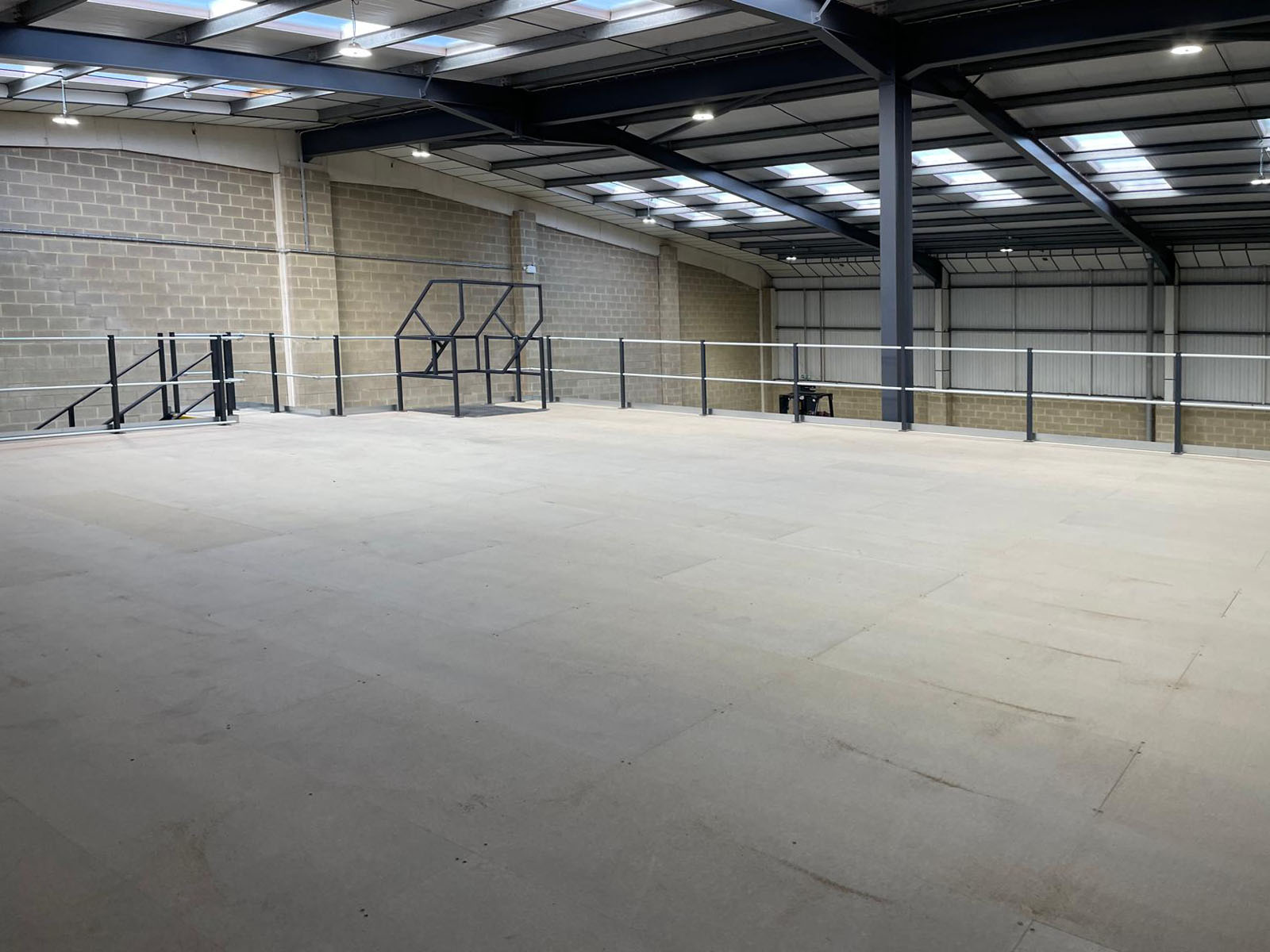
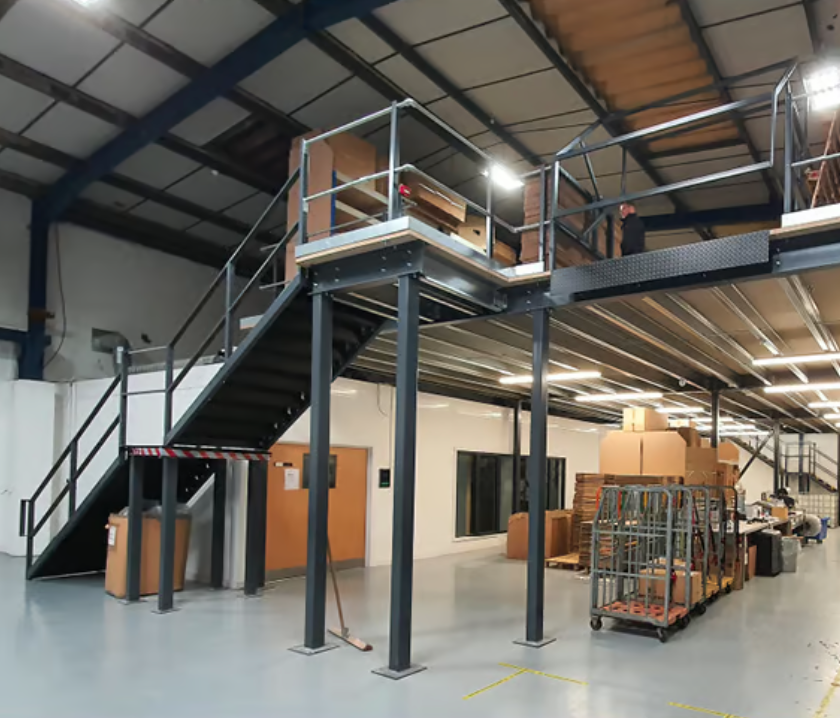
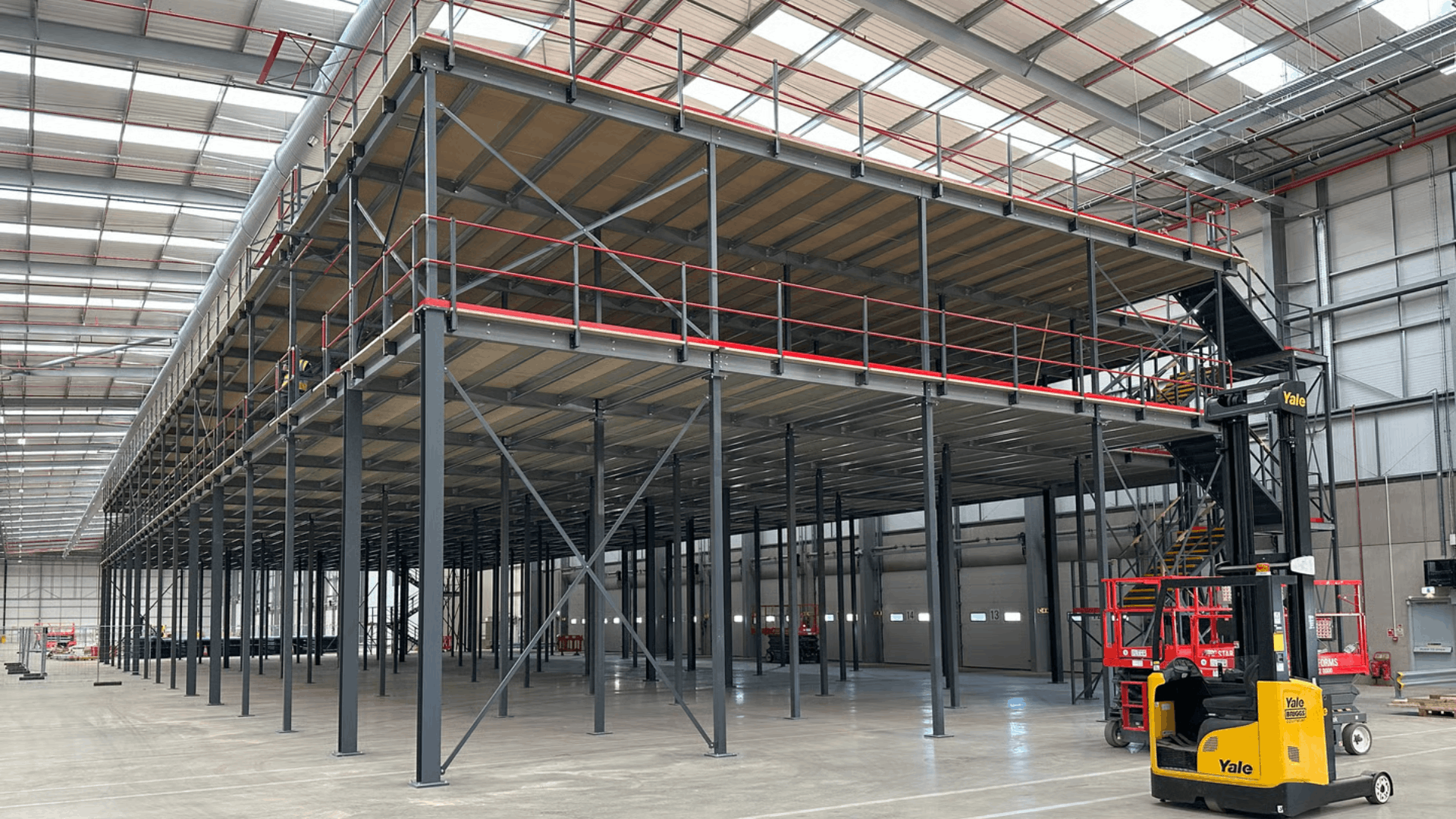
A mezzanine floor is an intermediate level built inside your existing warehouse, using the empty height above your heads. Most warehouses have plenty of unused vertical space, and a mezzanine turns it into usable floor area. You expand upwards instead of outwards, and you do it without leaving the building, changing your address, or disrupting your transport routes.
A warehouse mezzanine floor can be used for plenty of things:
- Extra storage for cartons, packaging, slow-moving or seasonal stock
- Picking and packing areas to take pressure off the ground floor
- Office space for supervisors and admin teams, overlooking the operation
- Light production, assembly or quality control
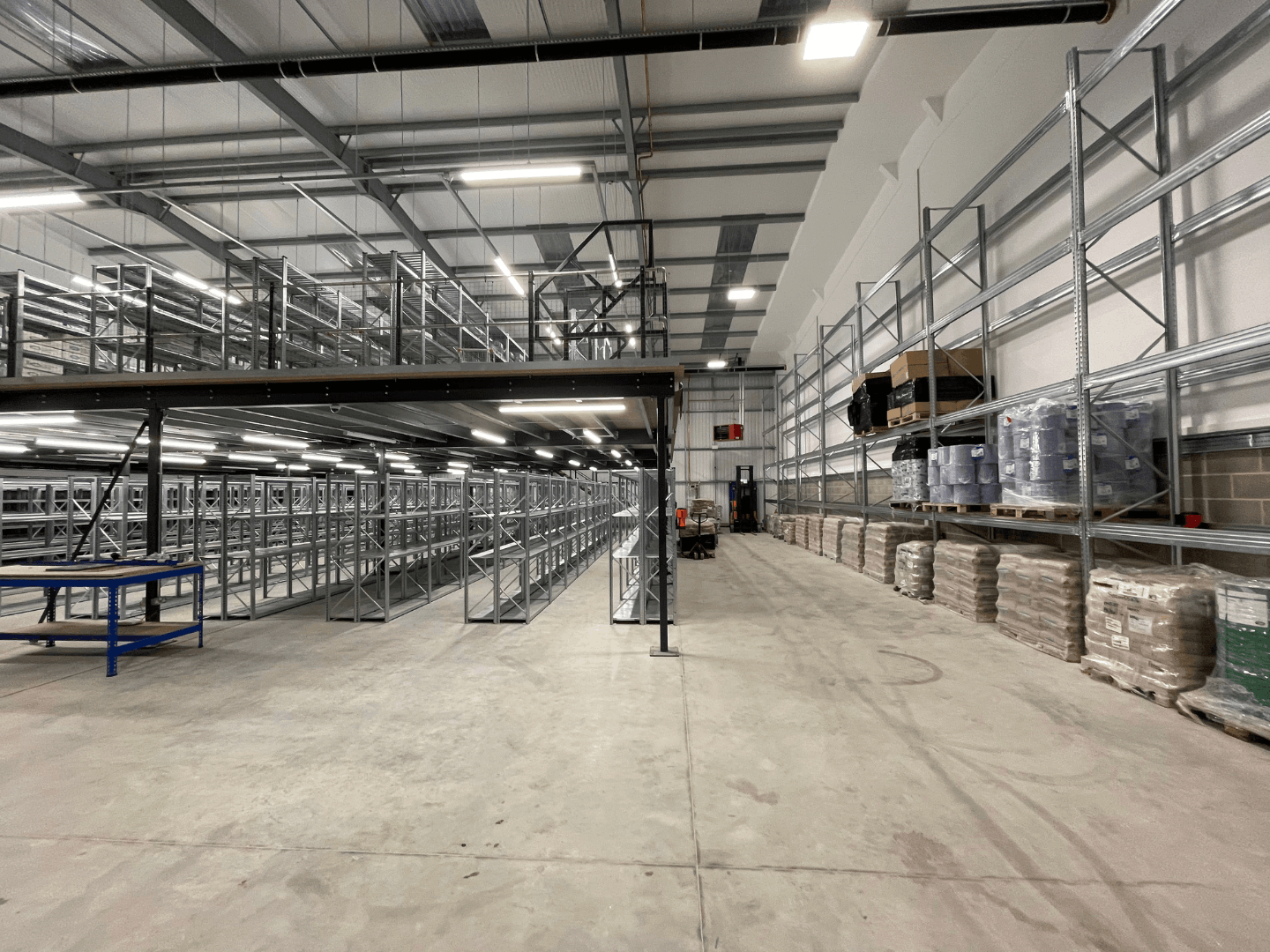
What a mezzanine costs compared with relocating
A freestanding industrial mezzanine floor in the UK typically costs between £300 and £600 per square metre installed, including the steelwork, decking, staircases, handrails and Building Regulations compliance.
Put that next to the worked example above. Adding, say, 800 square metres of mezzanine space might cost somewhere in the region of £240,000 to £480,000 at the top end of specification, and often considerably less for a straightforward storage deck. Crucially, it is a one-off capital cost. There is no higher rent afterwards. No annual increase in business rates. No move. For a lot of businesses the mezzanine pays for itself simply by avoiding the recurring overhead of a bigger lease, and it does so while keeping you in a location your staff and customers already know.
Planning permission and Building Regulations
One worry that puts people off is red tape, but it is more manageable than most expect. Installing a mezzanine inside an existing warehouse does not normally require planning permission under permitted development rights, as long as the outside of the building is unchanged. It does require Building Regulations approval covering structure and fire safety, and a reputable installer will manage that process for you. You can read more in our warehouse mezzanine floor design guide.
Proof that it works
This is not theory. We have helped businesses across the UK add the space they needed without moving an inch:
- For Smurfit Westrock, we created additional usable space within their existing warehouse while keeping the operational floor below fully available. Read the case study.
- For Cromwell Tools, a mezzanine formed part of a full warehouse fit-out at their Bristol Hub, with shelving installed above and below to make the most of the building’s height. Read the case study.
- For Cimcorp, we turned unused height into a professional office environment inside the warehouse, complete with partitions, services and branded finishes. Read the case study.
- For Harlow Timber, a storage mezzanine expanded capacity above their new trade counter without losing the operational space below. Read the case study.
Other ways to claw back space
A mezzanine is the most effective option for most growing operations, but it is not the only lever. Before you commit to a move, it is worth reviewing:
- Your warehouse layout, since repositioning fast-moving stock and improving pick paths often frees up more room than people expect
- Higher-density racking, such as narrow aisle or double-deep systems, to fit more pallet positions into the same floor area
- Your inventory itself, because slow-moving and obsolete stock quietly eats capacity
Often the best result combines a mezzanine with smarter racking and a tidier layout. The point is that you have more room to work with than the building first suggests, and it depends in part on getting the load capacity right for how you intend to use the space.
When does relocating actually make sense?
To be fair, moving is sometimes the right call, and it would be wrong to pretend otherwise. Relocation genuinely makes sense when:
- Your current site is too far from motorways and transport links, and that distance is costing you in time and delivery charges
- Your landlord will not allow alterations such as a mezzanine or automation
- Your forecast growth clearly exceeds what the current building could ever hold, even fully optimised
- You are consolidating several sites into a single hub
- The building itself has limitations you cannot design around, such as low eaves or a weak floor slab
If one or more of those applies, a move may well be justified, and the cost breakdown above will help you budget for it properly. But if your only real problem is that you have run out of floor space, relocating is an expensive way to solve something you could very likely fix where you are.
Talk to The Mezzanine Company
Before you commit to the cost and upheaval of relocating, it is worth finding out how much space you could add to the warehouse you already have. We design and build mezzanine floors for businesses across the East Midlands and the wider UK, and we will tell you honestly whether a mezzanine is the right answer for your operation.
Get in touch for a free site survey and a no-obligation quote. Our team will assess your space, talk through how you want to use it, and give you a clear idea of the cost before you decide anything.
Frequently asked questions
How much does it cost to relocate a warehouse in the UK?
Relocating a warehouse in the UK typically costs between £690 and £1,076 per square metre once every element is included, which means larger moves regularly reach six figures. The exact figure depends on your size, stock volume, distance, and how much fit-out the new site needs.
What are the hidden costs of a warehouse move?
The costs most businesses forget are dilapidations on the old site, business rates on the new one, operational downtime, lost productivity, staff turnover from a new location, customer disruption, and the time and expense of migrating your IT and warehouse management systems.
Is it cheaper to install a mezzanine floor than to relocate?
For most businesses moving purely because they have run out of space, yes. A mezzanine is a one-off cost, typically £300 to £600 per square metre installed, with no increase to your rent or business rates afterwards. A relocation is a large one-off cost followed by permanently higher running costs.
Do I need planning permission for a warehouse mezzanine floor?
Usually not. Installing a mezzanine inside an existing warehouse normally falls under permitted development, provided the exterior of the building is unchanged. You do need Building Regulations approval for structure and fire safety, which your installer should handle on your behalf.
How long does a warehouse relocation take?
Planning a warehouse move typically takes several months, with the physical move itself taking anywhere from a week to a month depending on size and complexity. A mezzanine installation, by contrast, can be designed and built with far less disruption and no break in your operation.