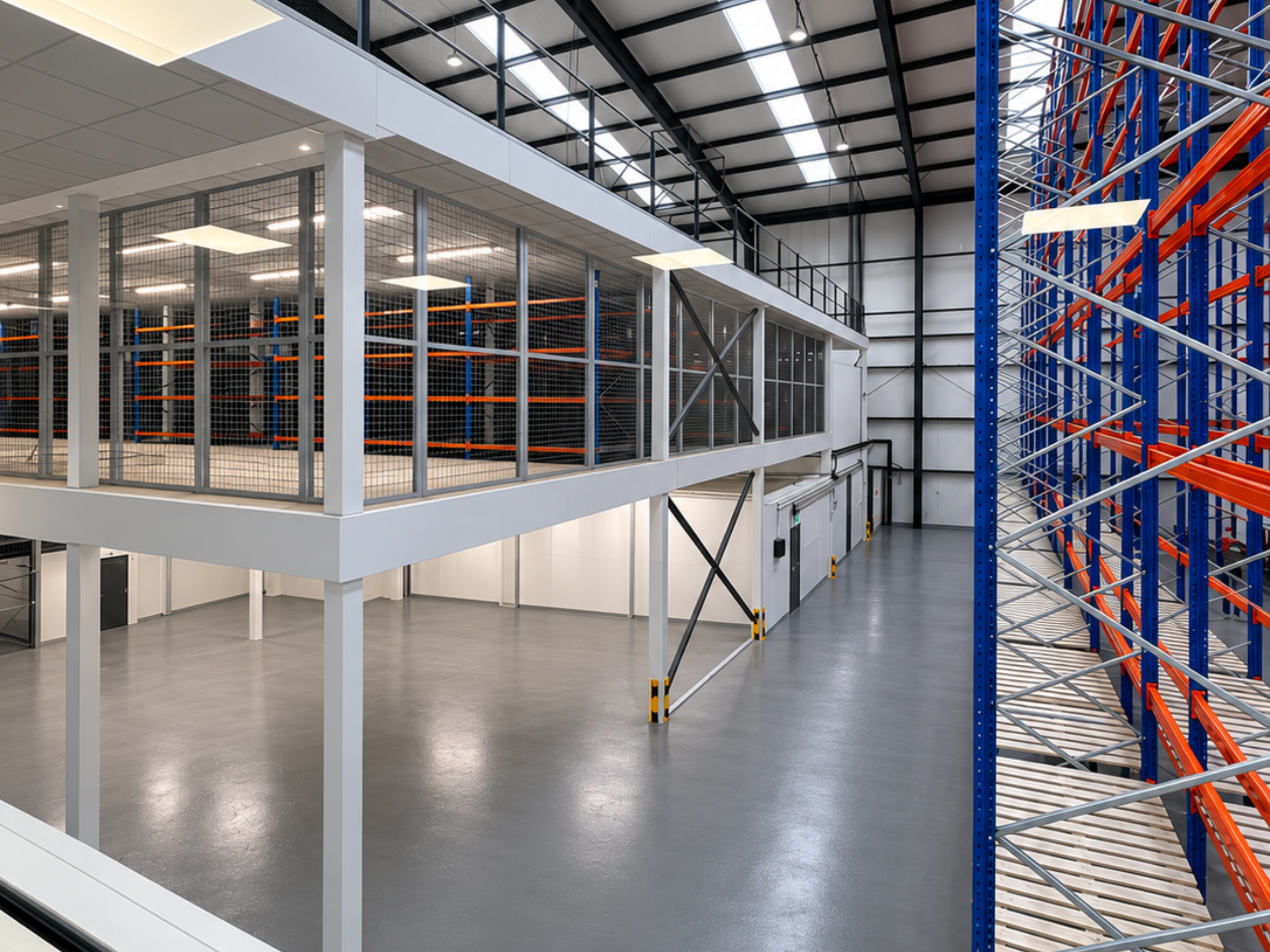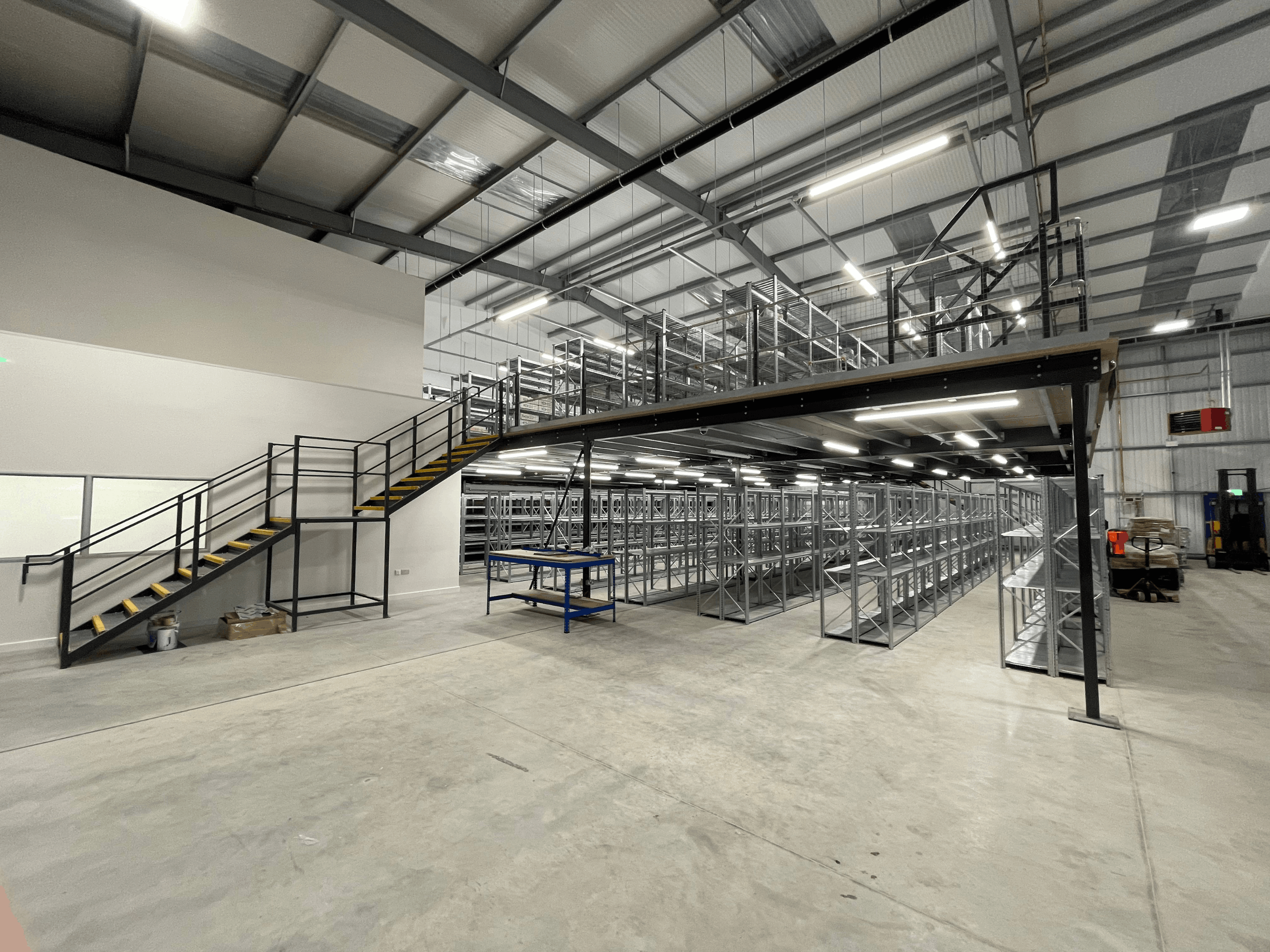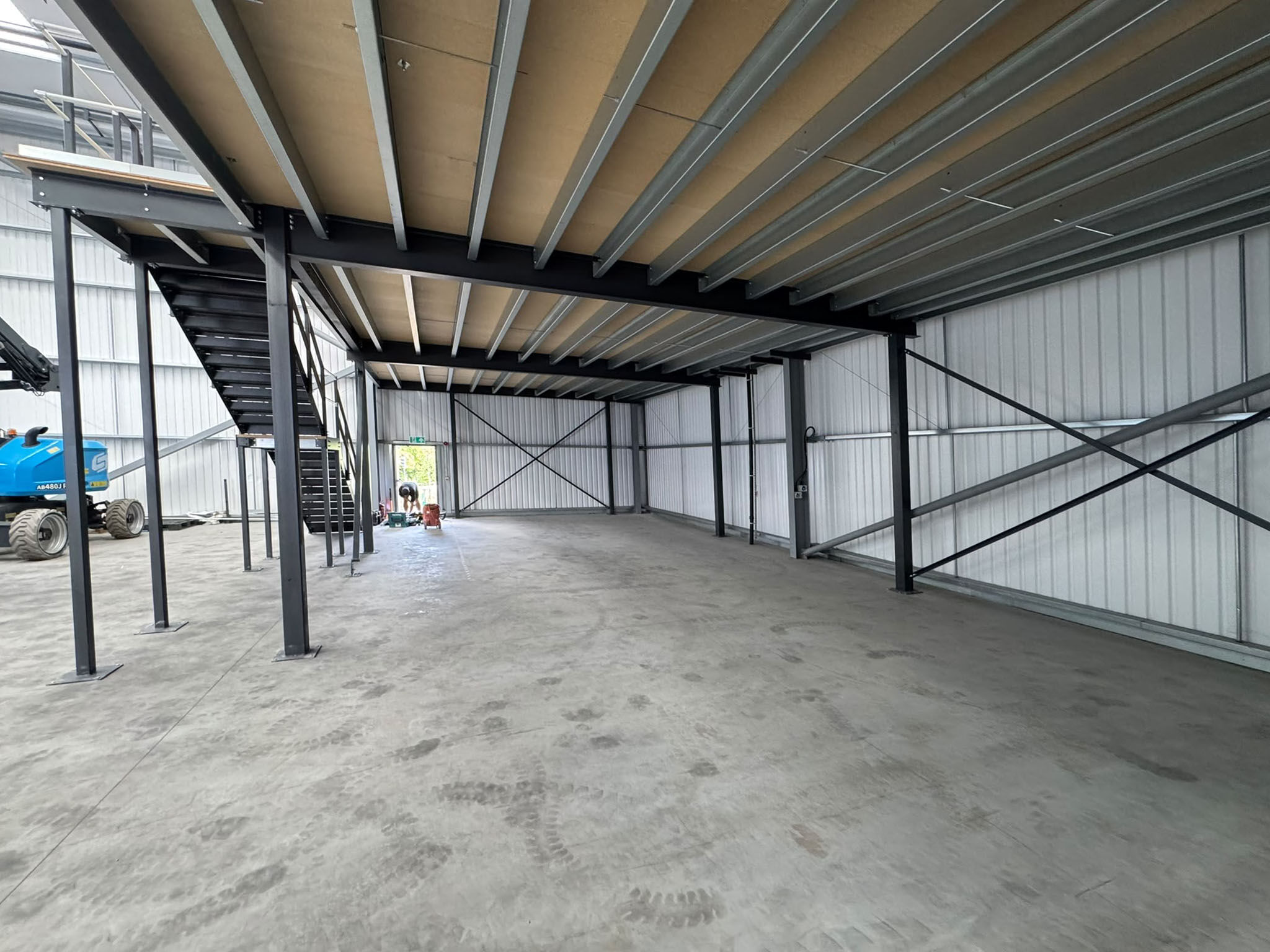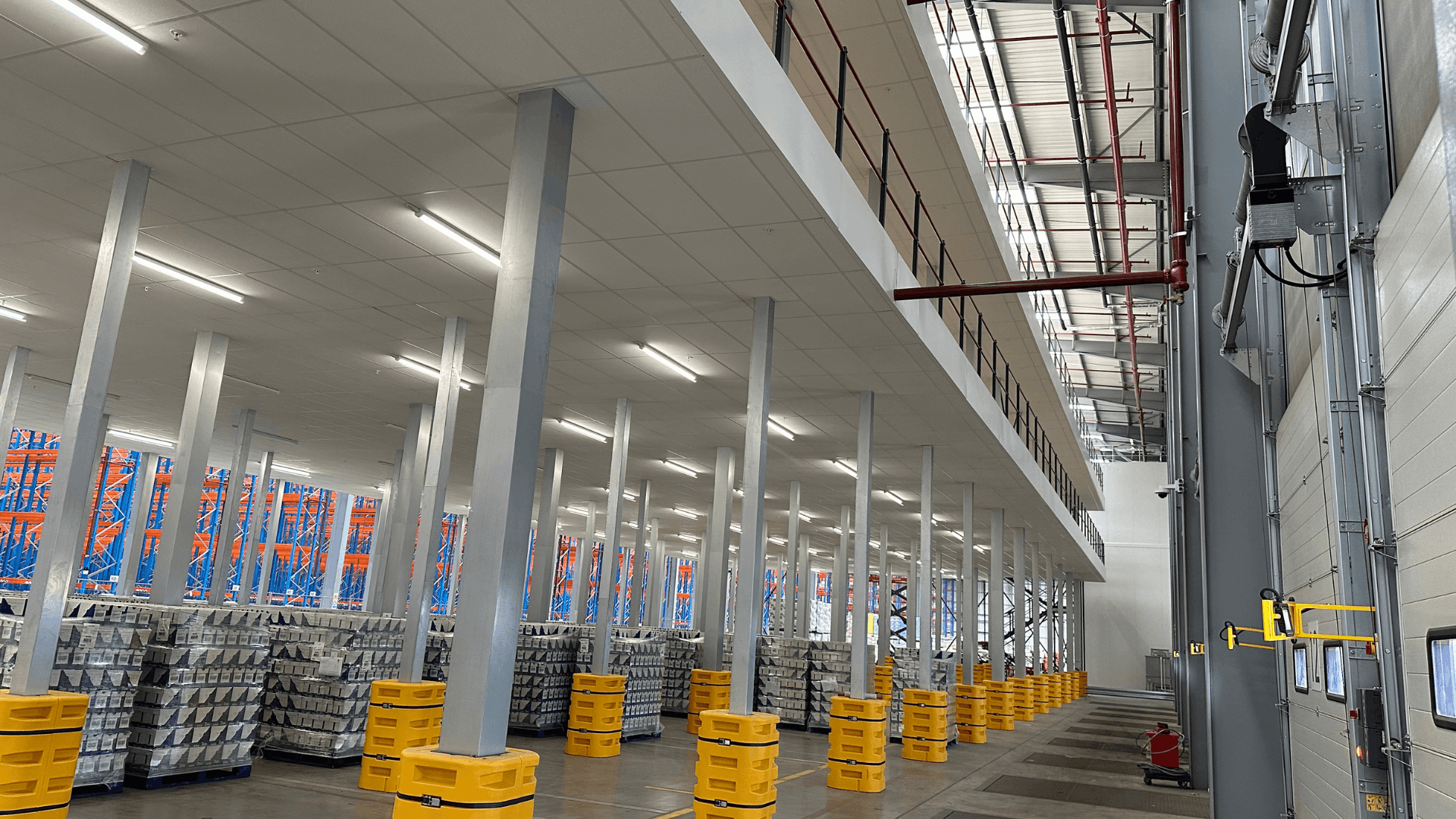
Getting the design right before a single column goes into the ground is the most important thing you can do when planning a mezzanine floor. A poorly planned layout creates problems that are expensive to correct later. Problems such as columns in the wrong place, access points that disrupt workflow, or a structure that simply does not meet building regulations. This guide walks through the key stages of planning a warehouse mezzanine floor design, so you go into the process with a clear picture of what is involved.
Assess the Space First
Eaves Height and Clear Height
This is the starting point. A mezzanine needs usable headroom both below and above the deck. As a general rule, you want at least 2.4 metres of clearance underneath for comfortable working conditions, and a further 2.4 metres above the deck. That means your building ideally needs a minimum clear height of around 5 metres before a mezzanine becomes practical. Buildings with lower eaves can sometimes still accommodate a mezzanine, but the design options become more limited.
Floor Loading Capacity
Your mezzanine floor load capacity is equally important. The ground-floor slab has to carry the weight of the mezzanine columns and everything on the structure above. Older industrial units sometimes have slabs that are thinner or weaker than modern specifications, and this needs to be verified before any structural design work begins. Your mezzanine installer will typically ask for details of the existing slab, or in some cases commission a structural survey.
Column Positions
Your column positioning shapes the entire layout. A freestanding steel mezzanine is supported by columns, and where those columns land on your ground floor has a direct impact on how you use the space below. If you have vehicles, racking, or production lines running underneath, the column grid needs to be planned around them. Wider column spans are achievable but come at a higher structural cost. The fewer columns you want on the ground floor, the heavier and more expensive the beams above need to be.
Finally, take stock of existing services:
- Sprinkler Systems
- Lighting
- HVAC Ducting
- Other Utilities
These all need to be considered. A mezzanine floor that cuts across an existing sprinkler zone, for example, will trigger additional fire safety requirements. Identifying these early avoids design revisions down the line.
Decide How the Mezzanine Will Be Used
The intended use of your mezzanine determines almost every other design decision, so this needs to be agreed before structural calculations begin.
Storage Mezzanines
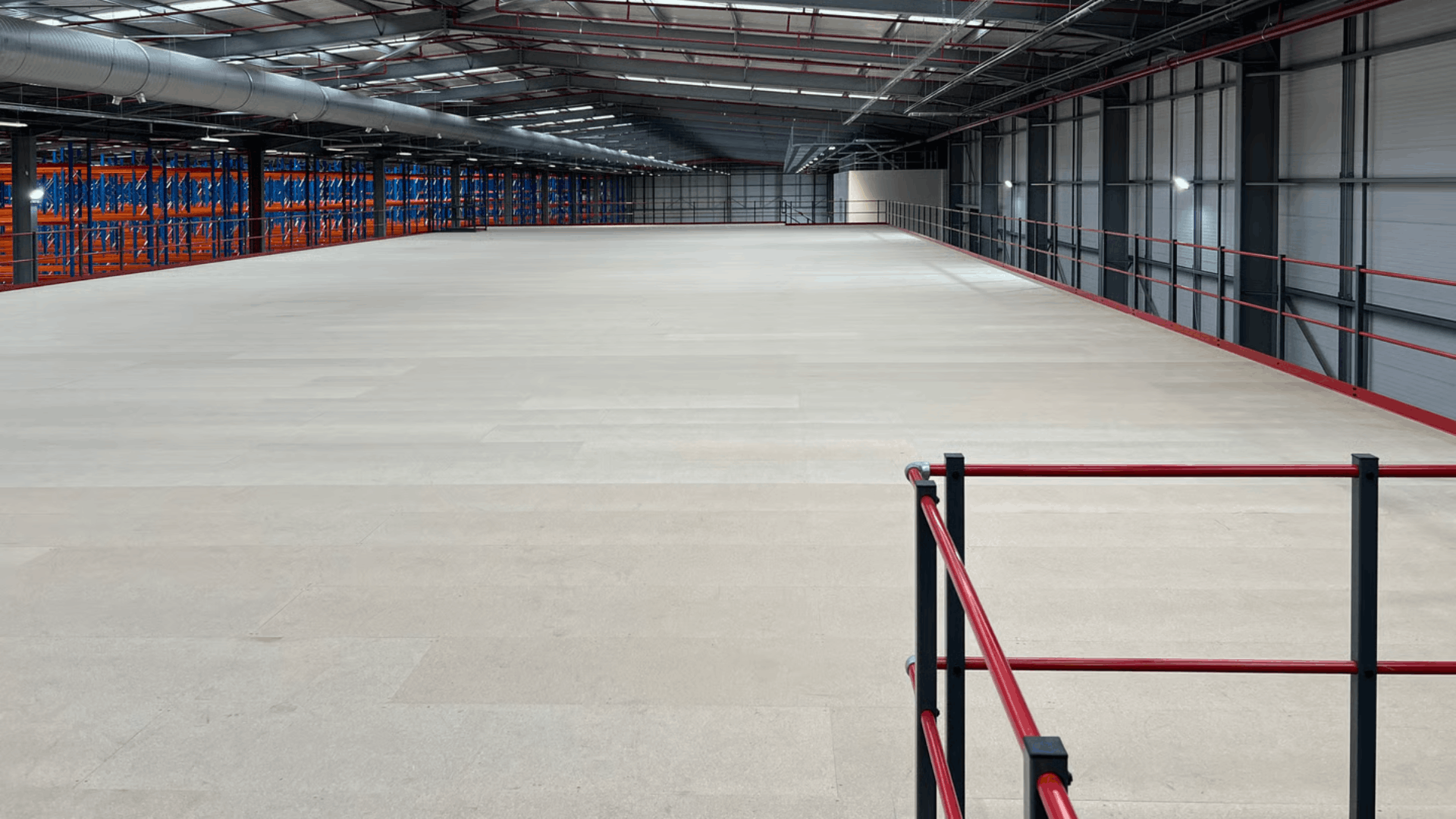
Storage mezzanines are the most common application in warehouse and industrial settings. If you are using the upper level for pallet storage or shelving, your load specification will typically be in the region of 360 to 500 kg per square metre. Goods access, whether via a pallet gate, scissor lift or goods hoist, will need to be factored into the layout from the start.
Office Mezzanines
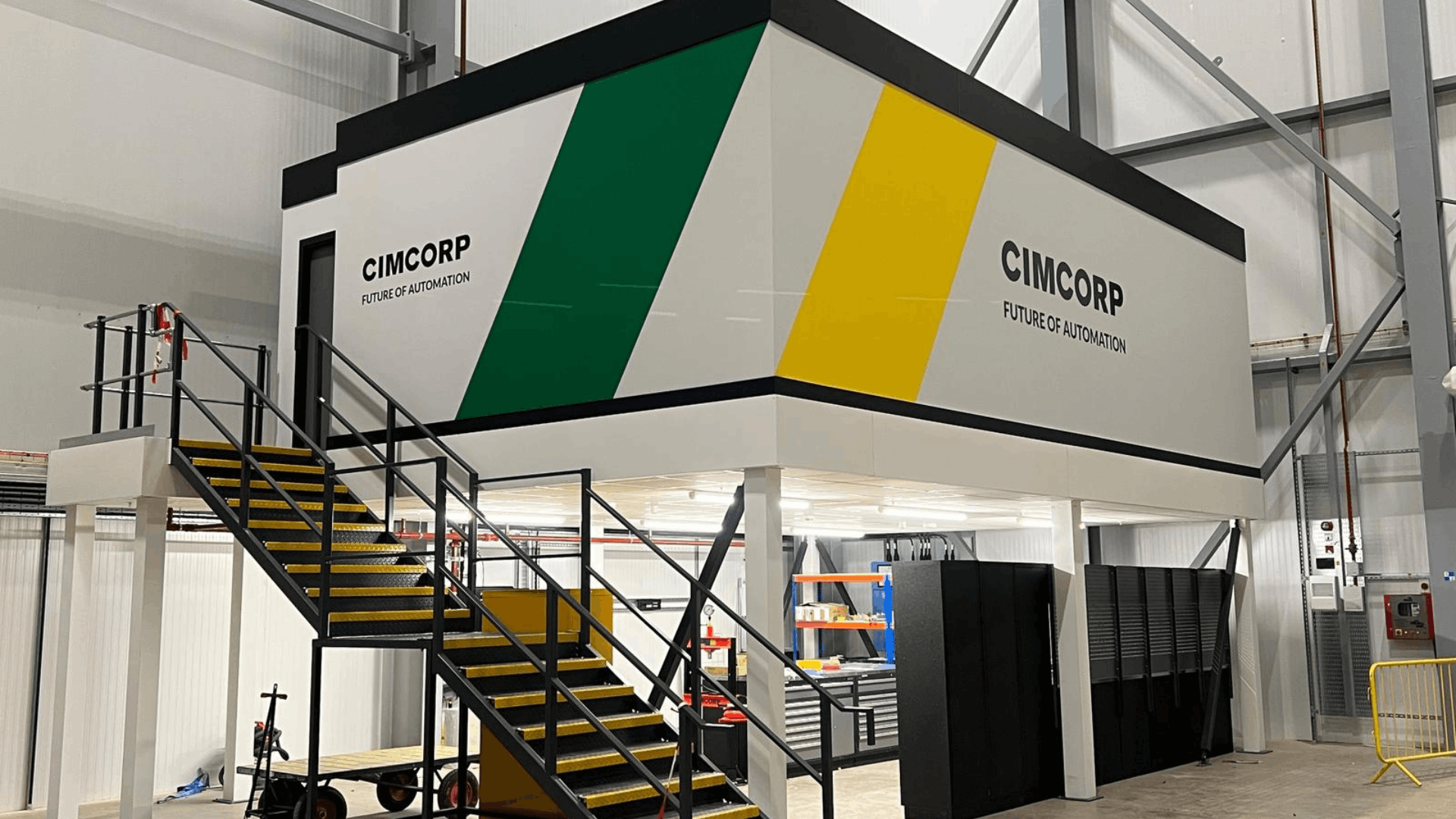
Office mezzanine floors generally require a lower structural load specification, usually around 360 kg per square metre, but the design considerations shift towards things like natural light, partition layouts, utilities, and comfort. An office mezzanine in a warehouse environment also needs careful thought around acoustic and thermal separation from the industrial space below.
Production and Picking Mezzanines
These sit somewhere between the two. If staff are working on the upper level with equipment, trolleys, or conveyor systems, the load spec and floor surface need to reflect that. Access needs to be practical for high foot traffic, and the column grid needs to work around the operational flow rather than against it.
It is worth being specific about future use as well. If there is any chance the mezzanine will be repurposed or extended within the next five to ten years, building in some structural headroom at the design stage is far cheaper than retrofitting later.
Understand Load Capacity and Structural Design
Load capacity is one of the areas where cutting corners causes the most serious problems. The structural design of the mezzanine needs to account for both the dead load (the weight of the structure itself, plus any fixed equipment or racking) and the live load (the weight of people, stock, and anything that moves on the deck).
Standard industrial mezzanines are typically designed to carry between 360 kg/m² and 500 kg/m², but this is not a figure to guess at. A structural engineer will calculate the required specification based on your intended use and issue calculations that form part of your building regulations submission.
The column grid (the spacing between support columns) also affects the structural design significantly. A wider column grid requires heavier primary beams to span the distance, which increases both the depth of the floor structure and the overall cost. Most standard warehouse mezzanines use a column grid of between 3 and 6 metres, but this can be adjusted to suit your operational needs.
Decking material is another structural consideration. Steel chequer plate is the standard for industrial and storage applications, offering durability and a non-slip surface. Particle board or resin-bonded board decking is more common in office mezzanines where a smoother, quieter finish is preferred.
Plan Access Carefully
Access is one of the most overlooked aspects of mezzanine floor design, and poorly positioned stairs or goods access points are a common source of operational frustration once a structure is in use.
Staircases
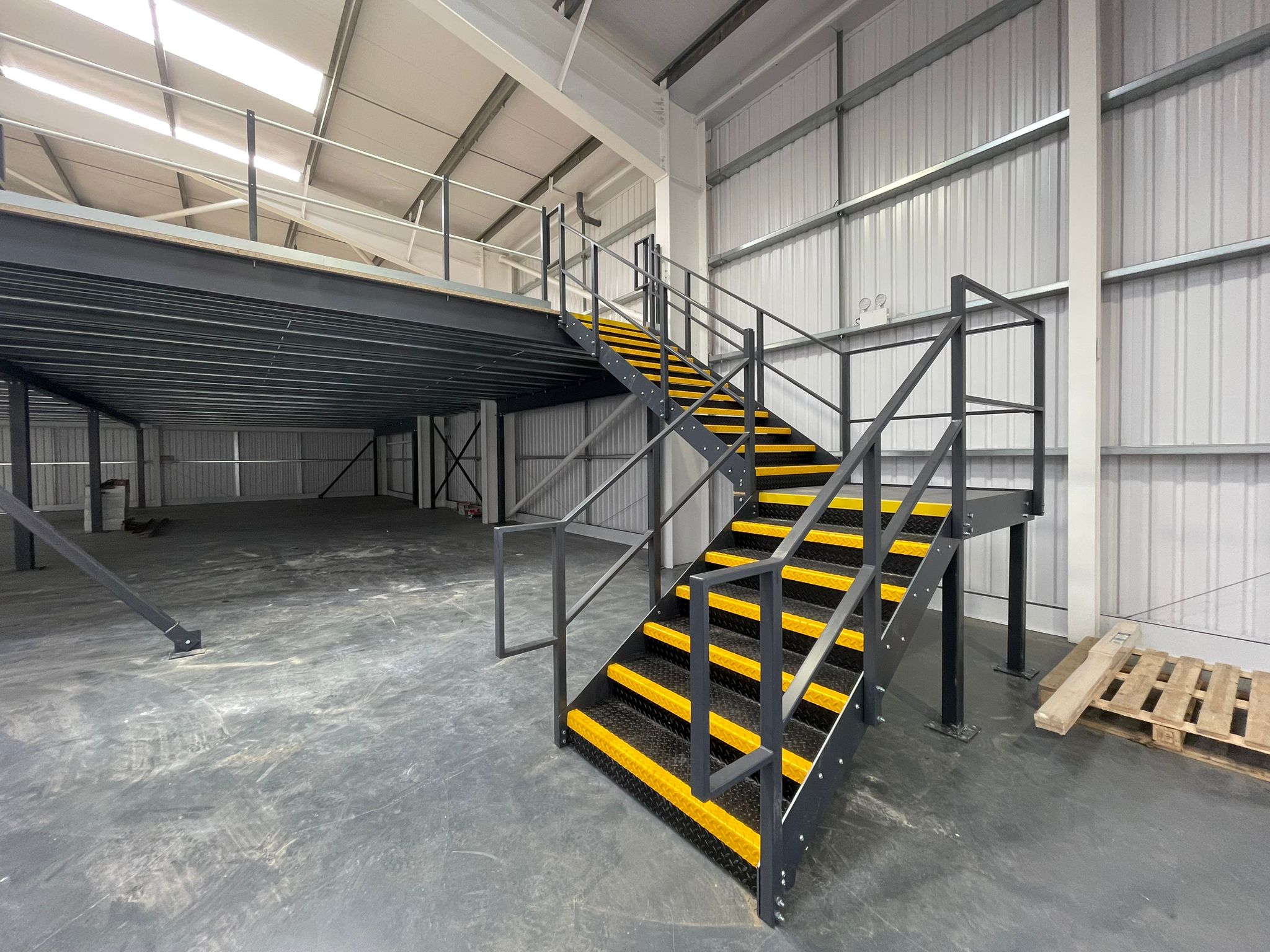
Staircases are required by building regulations as a means of escape, and their position within the layout needs to be considered early. A staircase takes up floor space both on the ground level and on the mezzanine deck, and its orientation affects how people move around both levels. Where space is tight, alternating tread stairs can reduce the footprint, but these are only suitable where access is infrequent. Altered staircases are not appropriate as primary access for regular use.
Goods Access
Goods access for a storage mezzanine needs equal attention. Pallet gates allow a forklift to deposit pallets onto the mezzanine deck from a scissor lift or goods hoist. The position of the pallet gate determines the flow of stock movement on the upper level, and it needs to be planned around the layout of any racking or shelving above. A goods hoist or scissor lift also needs a defined ground-floor footprint, and its position should be integrated into the overall warehouse traffic flow from the start.
Emergency Egress
Emergency egress is a building regulations requirement. Depending on the size and use of the mezzanine, you may need more than one means of escape from the upper level. This needs to be designed in from the start, not added as an afterthought.
Building Regulations and Fire Safety
All commercial mezzanine floors in the UK require Building Regulations approval before installation. This applies regardless of whether the mezzanine is being installed in a new unit or an existing one.
The two primary areas of compliance are:
Approved Document A (Structure)
This covers the structural integrity of the installation. Your mezzanine installer will appoint a structural engineer to produce calculations demonstrating that the design meets the required standards. These calculations form part of the Building Regulations application.
Approved Document B (Fire Safety)
This covers means of escape, fire resistance of structural elements, and fire detection and suppression. The specific requirements depend on the size of the mezzanine and how it is being used. An office mezzanine, for example, will typically need fire-rated enclosures on the staircase, smoke detection on both levels, and compliance with means of escape requirements. A storage mezzanine in a sprinklered building may have different requirements again.
It is worth noting that installing a mezzanine floor inside an existing warehouse does not normally require planning permission under UK permitted development rights, provided the external appearance of the building is unchanged. However, Building Regulations approval is still required, and your installer should manage this process on your behalf.
Working with a Specialist
The planning and design work described above is not something you need to navigate alone. A specialist mezzanine floor company will carry out a site survey, produce detailed structural drawings, manage the Building Regulations application, and coordinate the installation. What you should bring to that initial conversation is a clear picture of how you intend to use the space, what your current operational layout looks like, and any constraints like height, column positions and access requirements that the design will need to work around.
The earlier you involve a specialist in the process, the more design options remain open. Decisions about column positions, access points, and structural specification become harder to change once the design work is underway, so getting the brief right at the start saves time and cost further down the line.
If you are considering a mezzanine floor for your warehouse or industrial unit, The Mezzanine Company can carry out a free site survey and produce a no-obligation design and quotation. Get in touch to start the conversation.
Get a Free Design and Quote for Your Warehouse Mezzanine
If you are ready to start planning, The Mezzanine Company offers a free site survey and no-obligation quotation. Our team will assess your space, talk through how you intend to use the mezzanine, and produce a detailed design and quote based on your specific requirements. Get in touch via our online quote form and a member of the team will be back in touch to arrange a convenient time.