One of the key advantages of mezzanine floors is that they present endless usage potential for your business. As a result, you can gain that much-needed additional floor space within your building, without having to relocate.
In particular, creating a mezzanine floor for the purposes of office, retail or warehouse space are some of the most popular uses for mezzanine structures.
At The Mezzanine Company, we specialise in mezzanine floors for these usage purposes and many others.
So, if you’ve ever wondered what’s involved in building a mezzanine floor to house office, retail or warehouse space, here is a quick overview.
Office Mezzanines
As with all mezzanine floors, the key to tailoring the space is considering the usage intention and customising it accordingly.
With an office space, there is often a need to add a quiet, practical space away from the main operations of the building. Alongside office work, these spaces can also be used for dedicated meeting rooms or breakout zones within existing office buildings.
What’s involved?:
Design & layout: When tailoring a mezzanine floor for office use, our designers focus on comfort, acoustics and natural light. We strive to build office mezzanines that feel like part of the office rather than an add on.
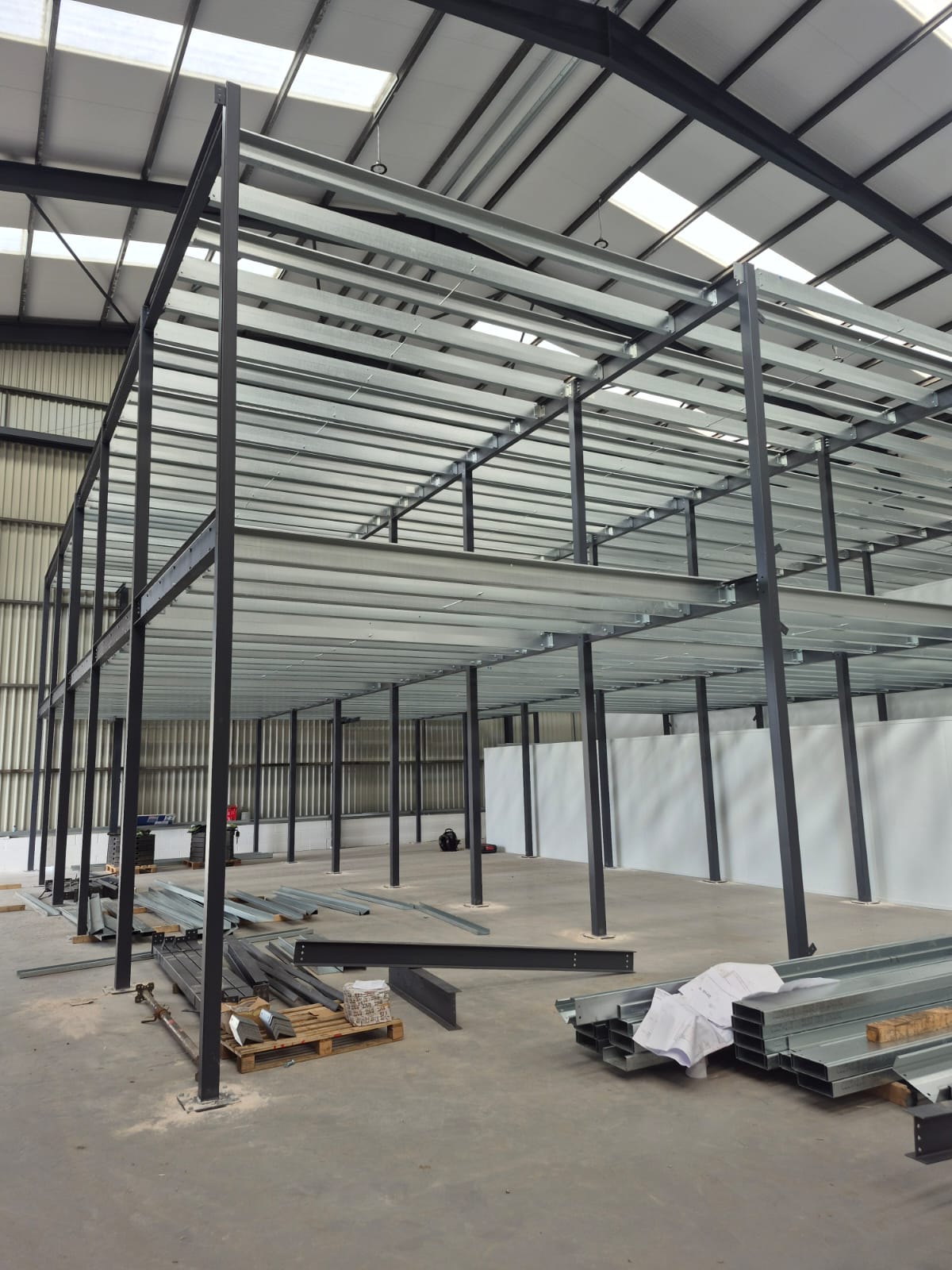
Structure & finishes: Office mezzanines are usually constructed with lightweight steel frames. Popular flooring options often include carpet tiles or vinyl.
Building services integration: Incorporation of lighting, central heating, air conditioning, data cabling and soundproofing.
Fire safety & access: Fire rated partitions, enclosed staircases and compliant escape routes.
Aesthetics: Suspended ceilings, glass balustrades and modern finishes for a professional appearance.
Outcome: A fully integrated, comfortable workspace that increases productivity and staff capacity without relocation.
Retail Mezzanines
A mezzanine in a retail premises gives you the option to expand selling space or create special display areas. Likewise, you can use a mezzanine floor to add back-of-house storage in shops, showrooms and department stores.
After all, if your current location is ideal, relocating isn’t always feasible, especially if you don’t want to lose footfall by moving to a new location. Instead, adding a mezzanine floor can give you the extra space you need to expand your retail business without having to change its address.
Thankfully, tailoring a mezzanine to suit retail use is quite straightforward. The approach to the design can work to blend with your existing decor as well as enhance it.
What’s Involved?:
Design & layout: Since a retail mezzanine will be customer-facing, it needs to offer seamless integration with the retail environment. It should be a reflection of your brand identity, but also offer ease of use and overall visibility for customers.
Structure & load: Retail mezzanines are designed for light to medium loads (customers, display units and stock).
Finishes & presentation: As a retail space, the finish and presentation needs to feel conversion-driven. It can feature aspects such as decorative flooring, balustrades and lighting to match the brand identity and store design.
Access options: Retailers often have a requirement to add lifts to ensure public access. Attractive staircases are also important for aesthetics. In terms of your backstage operations, we can incorporate aspects such as loading gates or service stairs for stock areas.
Regulations & safety: Retail mezzanines need to be built so that they comply with building regulation approval for public use. This includes considering fire exits, signage and safety barriers.
Outcome: A stylish, functional upper level that increases sales floor area and improves customer experience.
Warehouse Mezzanines
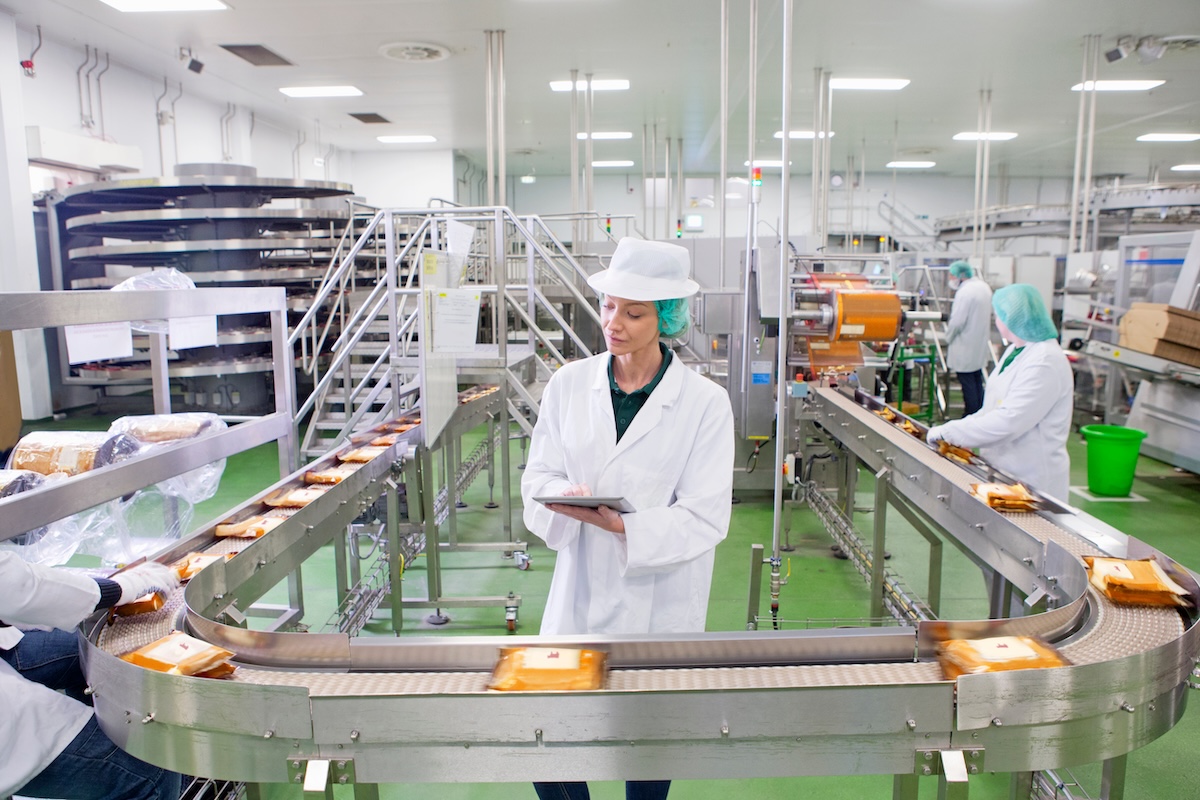
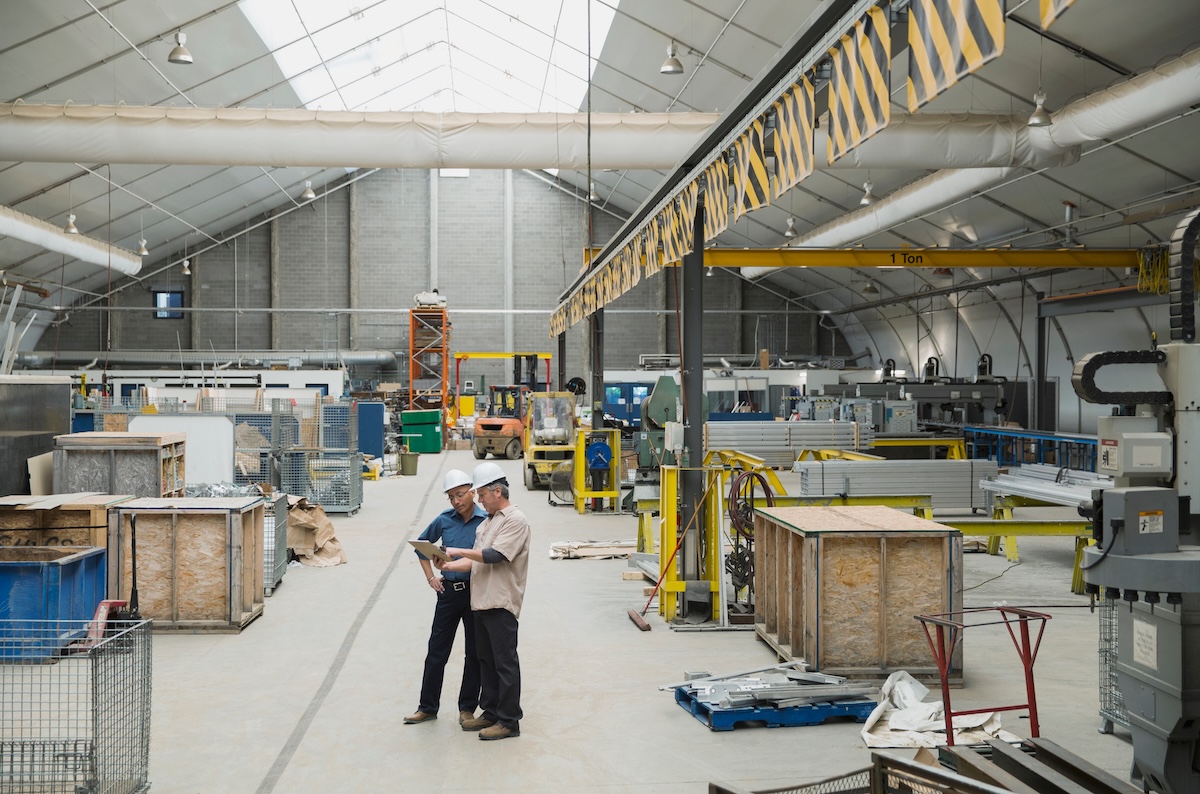
For any business which stores or manufactures goods, you will fully appreciate the impact that a shortage of space can have. So why not gain that vital warehouse space to store goods or operate machinery with a mezzanine floor?
One consideration with building and indeed tailoring your building to support a warehouse mezzanine is the structural integrity. At The Mezzanine Company, our experts are well versed in all of the requirements in terms of structural safety. However, it’s good to know that these projects can be more complex, especially when there is a need to support heavy duty machinery.
What’s Involved?:
Design & engineering: As noted above, warehouse mezzanines require the most robust approach to ensure the structural stability of the floor. Materials such as heavy duty structural steel designed for high load capacities (i.e. racking, machinery palletised goods) will be used.
Decking options: The flooring for a warehouse also needs to be more tolerant of heavy duty activity. Industrial-grade materials such as particle board, steel grating or chequered plates may be considered as options depending on the usage intention of the floor.
Access & handling: For a warehouse mezzanine, there is a need to accommodate equipment as well as people. Related features may include pallet gates, forklifts access points, conveyors and safety handrails.
Lighting & safety: Custom lighting solutions can ensure integration with existing warehouse lighting. There also needs to be a consideration of fire protection including sprinkler systems.
Installation: Careful planning can reduce downtime to ensure minimal disruption to operations.
Outcome: A durable, high load mezzanine that doubles usable space and improves operational efficiency.
Is Your Commercial Space In Need Of A Mezzanine Floor?
If you are interested in what’s involved when you want to transform your existing building into a mezzanine for office, retail or warehouse space, we hope the above has given you a good idea.
However, since every mezzanine project is different, we’ll only be able to share the finer details when we’ve completed a survey of your location.
To find out more, get in touch with our team here at The Mezzanine Company.
You can also give us a call on 0115 647 7140.