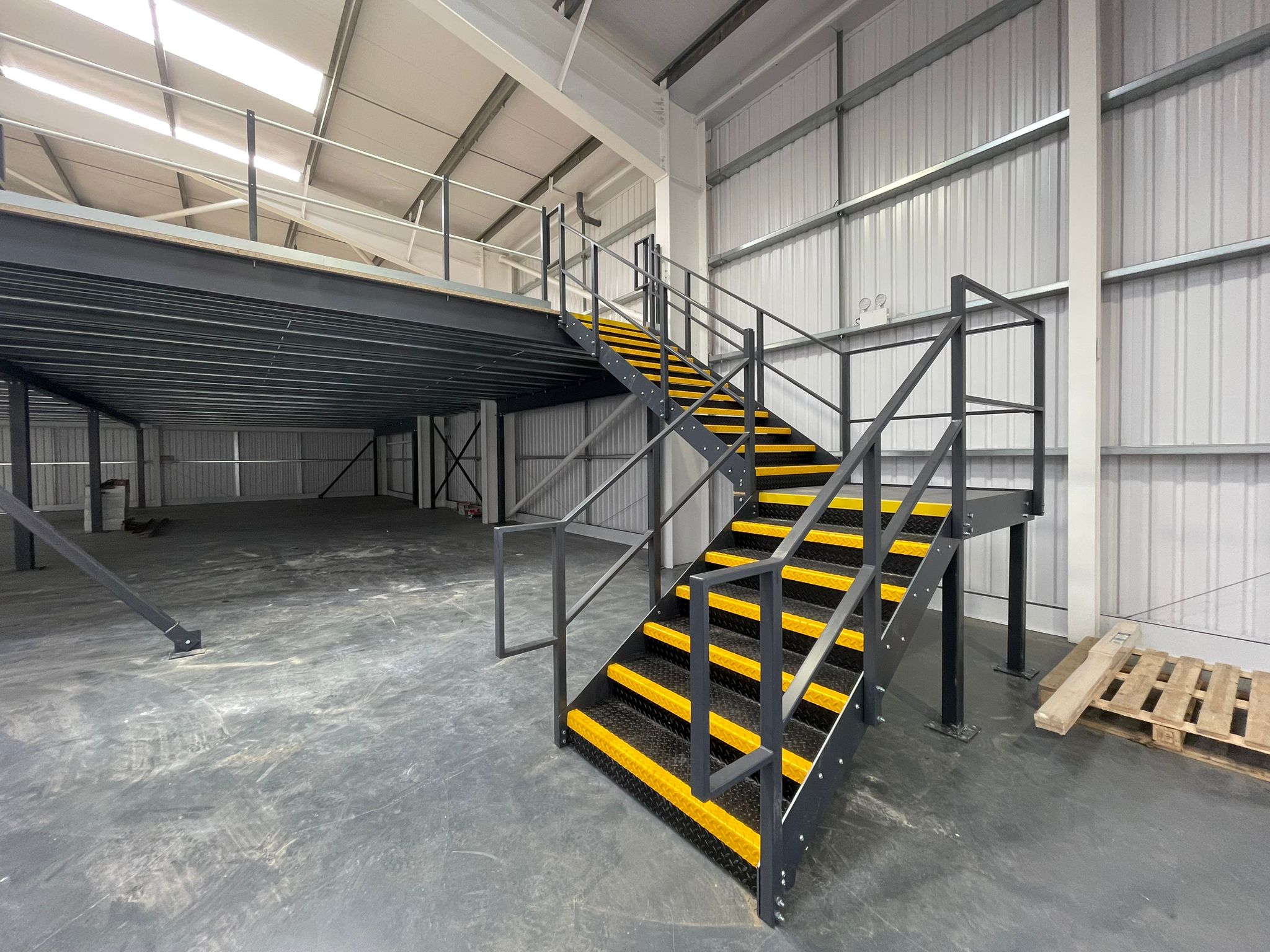
Gym mezzanines have flourished in popularity in response to how the fitness and leisure sector has changed significantly over the past decade.
In particular, where a straightforward open plan gym floor once satisfied most members, today’s operators are under real pressure to differentiate.
Separate studios, dedicated free weights areas, functional training zones, cardio decks and spectator areas all compete for the same square footage. For many facilities, the answer to that spatial pressure is not a larger building. It is a mezzanine floor.
Gym mezzanine floors are an increasingly common feature in commercial fitness and leisure environments, from independent boutique studios to large local authority leisure centres.
As leading UK installers of gym and leisure mezzanines, The Mezzanine Company are here to explain what’s involved when designing a mezzanine floor for the fitness and leisure sectors.
Why Gyms and Leisure Facilities Are Turning to Mezzanines
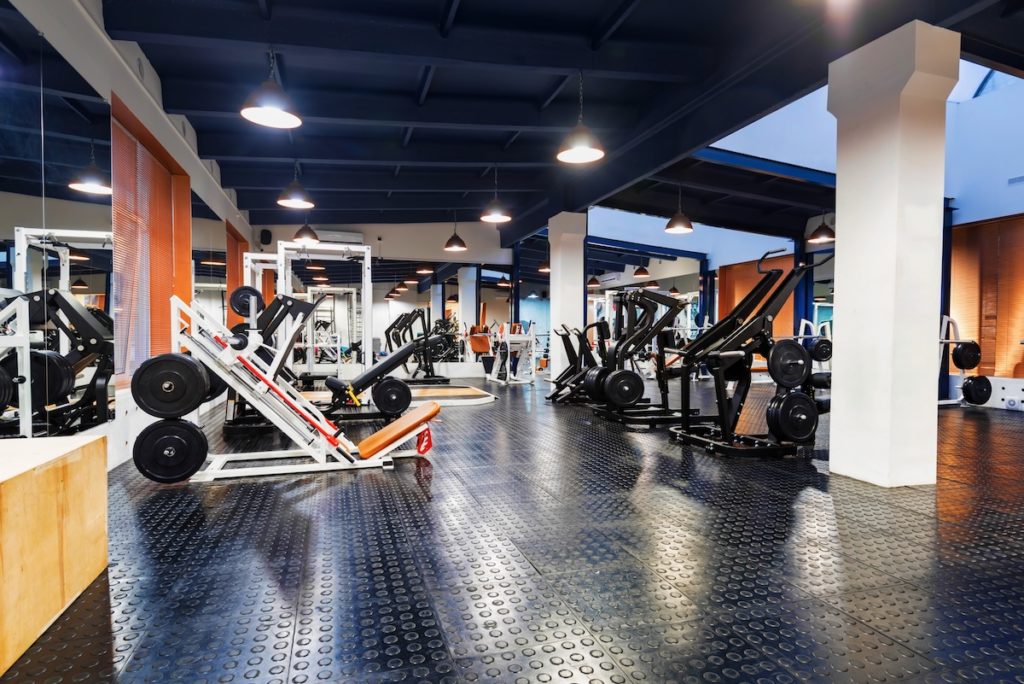
According to the latest research, there are over 7,000 gyms in the UK. But with an estimated 10.4 million individual members of gyms and fitness clubs, space is often at a premium within most gyms.
Rather than extend or relocate, many gym and leisure facilities are turning to more intuitive ideas to gain extra space, including mezzanine floors.
A mezzanine floor creates additional usable floor area within an existing building envelope without the cost or disruption of an extension or relocation. For a gym operator working within a fixed lease, or a leisure centre that has outgrown its footprint but cannot justify a capital build project, a mezzanine installation can double or even triple the functional area available.
Some ideas of how gym and leisure mezzanines can be used include:
- Cardio zone (treadmills, bikes, rowing machines)
- Changing rooms or lockers (if structurally suitable)
- Functional fitness space (HIIT, circuit training, CrossFit-style setups)
- Gaming or recreation zone (table tennis, pool tables, etc.)
- Group exercise classes (spin, dance, aerobics, boxing)
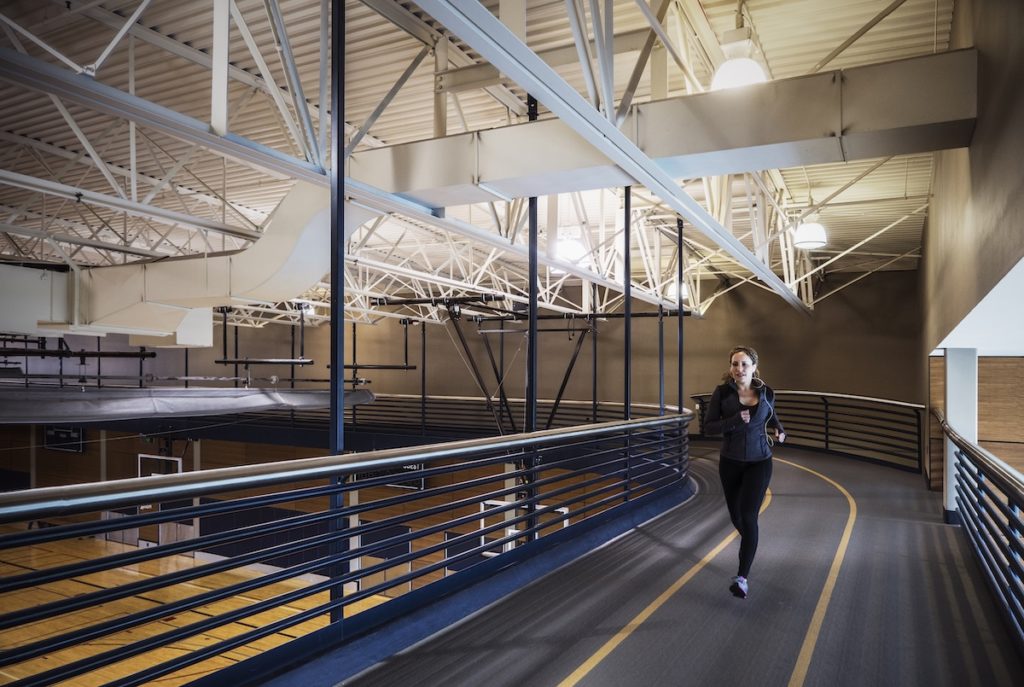
- Indoor running track (perimeter mezzanine layout)
- Juice bar or small café
- Lounge or relaxation area (seating, recovery zone)
- Office or consultation rooms (fitness assessments, coaching)
- Personal training zone (semi-private coaching space)
- Rehabilitation/physio area
- Spectator/viewing platform (overlooking courts or main gym floor)
- Storage for gym equipment and mats
- Strength training area (free weights, resistance machines)
- Stretching and mobility area
- Yoga and Pilates studio (quiet, open space for classes)
Beyond gaining extra square footage, a mezzanine also allows operators to separate uses that would otherwise interfere with one another.
For instance, a dedicated spin studio above the main gym floor eliminates noise bleed between high-intensity classes and quieter functional training areas. Likewise, a yoga or Pilates studio on an upper level provides the calm, focused environment those disciplines require without sacrificing prime floor space below.
In larger facilities such as sports halls, leisure centres and council-operated fitness hubs, mezzanine floors are also used to create spectator or viewing galleries above court or pitch areas, providing capacity for events and competitions without the footprint of a permanent stand. Therefore, their usage potential is truly endless.
Load Design: Getting the Specification Right for Gym Use
As is the case with every mezzanine floor, it must be designed and built in a way that applies to how the space will be used.
Gym environments carry significantly higher imposed loads than most other uses and this needs to be reflected in the structural design from the outset. However, this is something that a structural engineer will assess prior to the mezzanine being built, since the requirements can look very different for every gym or leisure mezzanine.
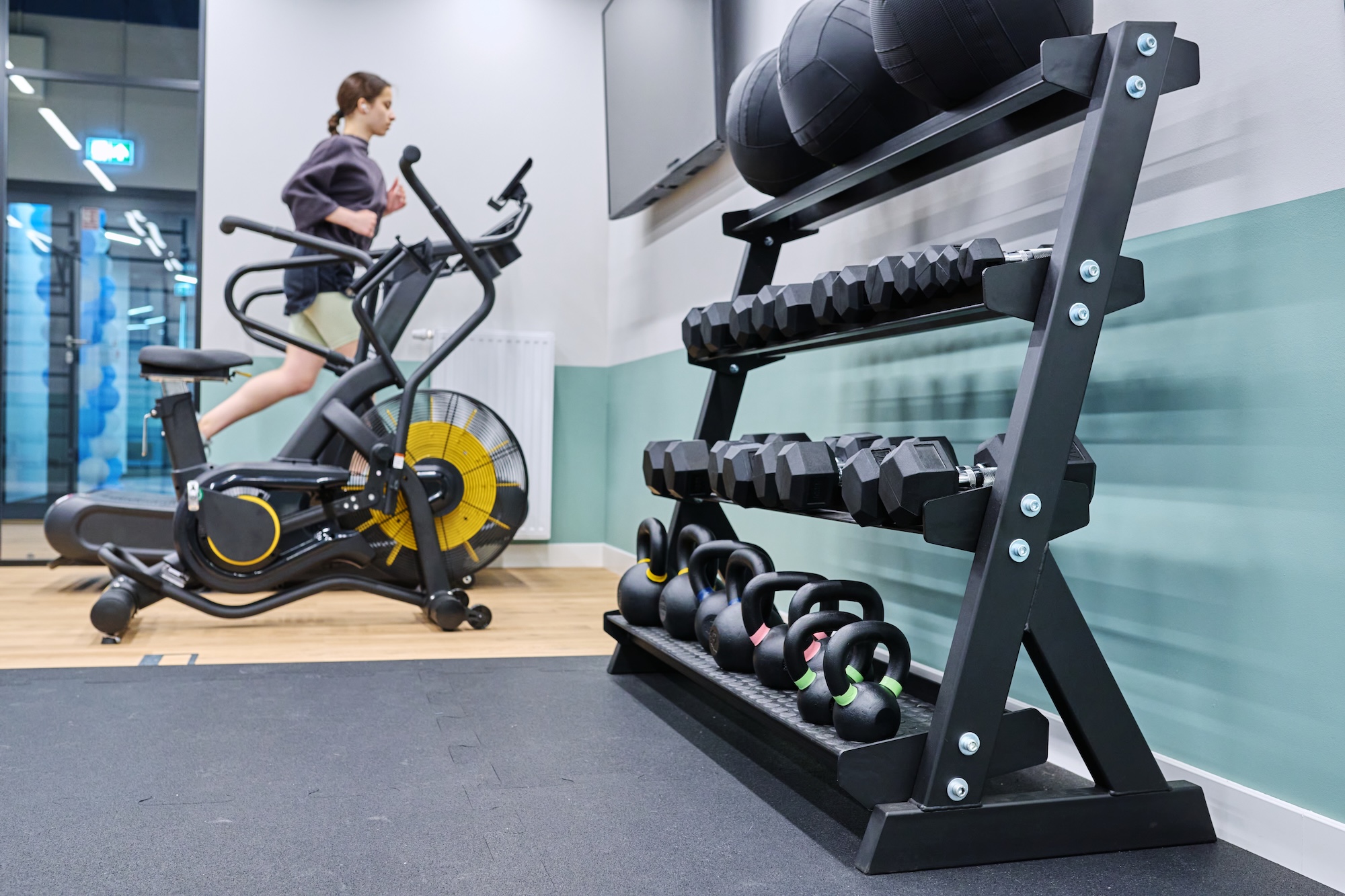
But to give you an idea, a gym mezzanine floor will typically require a higher specification, particularly in areas housing free weights, plate-loaded machines, or heavy cardio equipment such as rowing machines, ski ergs or assault bikes.
Free weights areas, in particular can concentrate very high point loads into a small area and the mezzanine structure must be designed to accommodate these.
Vibration is also a material consideration that is often underestimated at the design stage. Gym use generates significant dynamic loading: footfall from running and jumping, weighted drops and rhythmic movement in class environments. A mezzanine that flexes perceptibly underfoot will not inspire confidence in users and in class environments. Ultimately, any floor movement can affect performance and safety.
Therefore, the structural specification should include deflection limits appropriate to the activity. In response, the decking material should be selected to complement rather than amplify vibration.
Design Considerations For Different Leisure Uses
As we’ve just touched upon above, not all gym and leisure mezzanines are the same. This means that the design approach should reflect the specific activity that the upper level will support.
Let’s look at some common examples based on the types of gym and leisure mezzanine floor projects we work on across the UK:
Cardio Decks
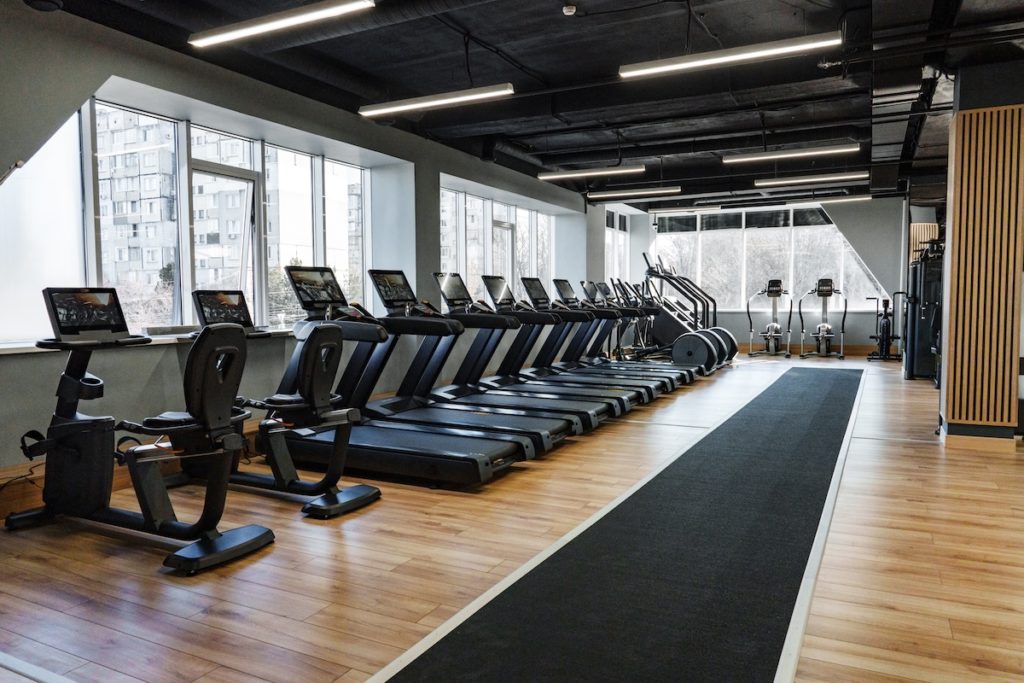
Cardio decks are one of the most common applications for gym mezzanine floors. Banks of treadmills, cross-trainers, cycles and rowing machines occupy the upper level while resistance equipment occupies the floor below. The high footfall and vibration loading of cardio equipment requires careful structural specification and access points should be wide enough to allow equipment to be moved on and off the level without difficulty during refits.
Group Exercise And Studio Spaces
Group fitness activities suit mezzanine installation well, particularly where the primary gym floor is at ground level. A yoga studio, Pilates studio or spin room on an upper level benefits from the separation from the main floor activity. The enclosed nature of mezzanine studio spaces also supports better acoustic treatment. Ceiling height on the upper level needs to be considered carefully. For instance, a yoga class requires enough clear height above head level for standing poses and a spin studio needs adequate ventilation provision.
Free Weights And Strength Training
Personal training zones can work well on a gym mezzanine floor, but the structural brief must account for the concentrated point loads involved. Raised platforms for Olympic lifting should be considered carefully in terms of their load transfer and the impact loads generated during heavy lifts. A structural engineer with leisure sector experience will be able to advise on the appropriate design approach.
Spectator Areas
Viewing galleries and spectator areas above sports halls, swimming pools and multi-use courts use mezzanine construction to create permanent spectator capacity without the cost of a dedicated stand structure. These applications involve lower imposed loads than equipment-based gym uses but require careful attention to sightlines, edge protection and access.
Changing & Storage Areas
Ancillary and support spaces such as changing facilities, storage, reception and office accommodation are also commonly incorporated into leisure mezzanine designs. These uses are less structurally demanding than gym applications and are often combined with gym space on the same upper level to make efficient use of the available height.
Staircase and Access Design
Access to a gym mezzanine floor is not purely a regulatory matter. It is also a user experience consideration that affects how the space functions in practice.
Staircases in gym environments need to be wide enough to allow comfortable two-way traffic at busy changeover times and to accommodate the movement of equipment during installation and replacement. A minimum width of 1,200mm is generally appropriate for public access staircases in leisure settings, though wider stairs improve flow considerably in high-footfall facilities.
In a gym environment where users may be in athletic footwear, wet from swimming or carrying equipment, the anti-slip performance of stair treads is particularly important.
Where accessible access is required, platform lifts are the most commonly specified solution in mezzanine gym installations. These integrate cleanly into the structural bay layout and in most facilities, provide adequate capacity for the number of users who require step-free access.
Integrating Services and Finishes
A gym mezzanine floor is not just a structural platform. It is a finished, operational space that needs to work as a gym.
Electrical distribution, lighting, ventilation, data and AV infrastructure all need to be planned into the mezzanine design at an early stage rather than added retrospectively.
Gym lighting on a mezzanine level needs to account for the lower ceiling height that an upper level typically involves. Where the underside of roof trusses or existing structure limits clear height, lighting and ventilation routes require careful coordination.
A ventilation engineer should be involved at the design stage to ensure that thermal comfort requirements for the specific activities planned can be achieved within the constraints of the space.
Flooring on the mezzanine surface should be matched to the intended use. Cardio areas benefit from shock-absorbing rubber or foam-backed gym flooring. Free weights areas typically use dense rubber matting capable of withstanding equipment drops, while studio spaces may use sprung timber flooring to support movement-based classes.
The mezzanine decking specification should be compatible with the chosen floor finish and any acoustic underlay should be factored into the overall floor build-up.
Planning Your Gym Mezzanine Floor Project
The earlier a specialist mezzanine designer is involved, the better. Key information to establish at the outset includes the available building height, the condition and load capacity of the existing floor slab, column grid dimensions, the intended activities on the upper level and any fire or listed building constraints that affect the design.
A professional site survey is the starting point for any credible mezzanine floor design. It establishes what the building can actually accommodate and ensures that the specification produced is appropriate for the loads and uses involved rather than a generic estimate.
The Mezzanine Company designs and installs mezzanine floors across a range of commercial and leisure applications, including gym mezzanine floors, studio spaces, viewing galleries and leisure facility fit-outs. If you are considering a mezzanine installation in a gym or leisure environment and want to understand what is possible within your building, get in touch to arrange a survey and initial design consultation.
Gym Mezzanines FAQs
We’ve answered some of the top questions people ask about installing mezzanines to house a gym or leisure facility in the UK.
For anything else, or to begin a project with us, please call 0115 939 7572.
What Is A Gym Mezzanine Floor?
A gym mezzanine floor is a freestanding raised platform installed within an existing gym or leisure building to create additional floor area on a second level. It is used to house additional gym equipment, studio spaces, cardio decks or similar sport or leisure facilities without extending the building footprint.
Do Gym Mezzanine Floors Need Building Regulations Approval?
Yes. All mezzanine floor installations in the UK require Building Regulations approval. For gym and leisure applications, Part A (Structure), Part B (Fire Safety), Part K (Protection from Falling) and Part M (Accessibility) are all relevant.
As part of our services, we will handle building control checks, plus any similar elements which matter for safety and legal compliance. If you’d like to ask us any questions about this aspect of your installation, please contact us.
Where Do You Install Mezzanine Gyms?
The Mezzanine Company is headquartered in Nottingham, but our service coverage extends right across the East Midlands, West Midlands and elsewhere in northern England.
If you want to build a mezzanine gym or leisure facility near or outside of these areas, please contact us as we may still cover your location.
How Much Weight Can A Gym Mezzanine Floor Hold?
As you can appreciate, we can’t offer specific figures here since we’ll first need to assess your space. However, what we can tell you is that gym mezzanine floors are typically designed to higher load specifications than office or retail mezzanines. This is to account for heavy equipment, point loads from free weights and the dynamic loading generated by exercise activity. When you choose us as your mezzanine floor installers, we’ll dispatch a structural engineer to establish the appropriate design load for your specific application.
How High Does A Building Need To Be For A Gym Mezzanine Floor?
A site survey will confirm whether your building is suitable and we can arrange this for you when you get in touch. However, as a general rule, a minimum of 4.5 to 5 metres of clear internal height is needed to install a mezzanine floor that provides adequate head height on both levels. We’ll be able to provide more details once we understand more about the activities planned for your gym or leisure mezzanine, including the equipment height and services routing.
Can A Mezzanine Floor Be Added To An Existing Gym?
Absolutely! While we’d need to carry out a survey to confirm, it is usually quite straightforward to install a mezzanine floor within an existing commercial gym or leisure building. Furthermore, installations can typically be carried out with minimal disruption to ongoing operations.
Gym Mezzanine Installations UK – Get A Free Quote
Are you interested in installing a mezzanine floor to increase capacity for a gym or similar leisure facility?
The Mezzanine Company can take care of the entire design and installation process on behalf of your business.
Our mezzanine floors are tailored to the exact needs of our clients and are built to comply with building regulations, plus everything else that matters to ensure your company benefits from a safe and highly functional space.
We offer a free quote on all projects, allowing you to tell us more about your gym or leisure facility plans.
Or, if you have any questions about installing a gym or leisure mezzanine floor, please call us on 0115 939 7572.